
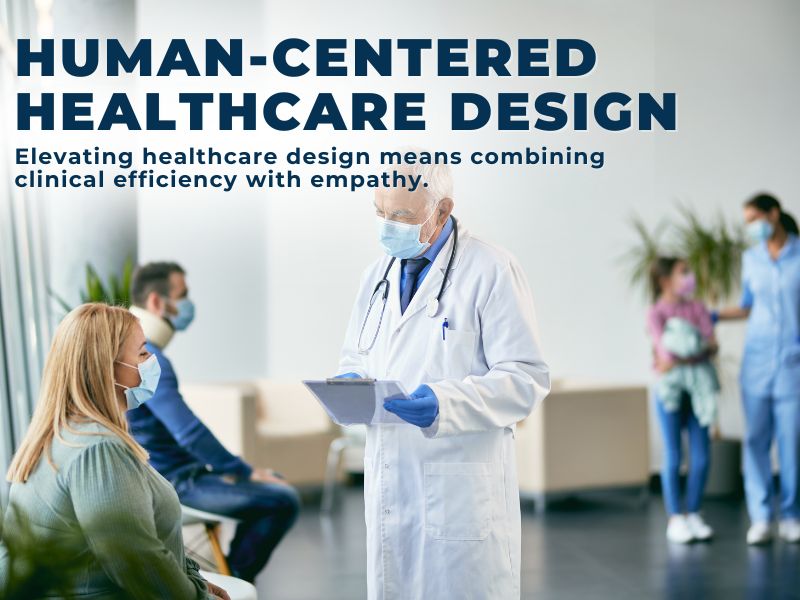
Elevating healthcare design requires a human-centered approach that thoughtfully integrates clinical functionality with compassion and empathy. By humanizing technology, creating inclusive and accessible spaces, supporting staff well-being, and carefully mapping the patient journey, healthcare environments can become more intuitive and comforting. These strategies not only improve operational efficiency but also help reduce stress, enhance patient experiences, and support better healing outcomes.
What are the 5 steps of human-centered design?
The five steps of human-centered design are empathize, define, ideate, prototype, and test. This process starts with understanding users’ needs, clearly defining the problem, developing ideas, creating solutions, and testing them to improve results.
What is the human-centered design process in healthcare?
In healthcare, the human-centered design process focuses on understanding patients, caregivers, and medical staff to create systems, spaces, and services that improve safety, comfort, and efficiency. It involves research, collaboration, prototyping solutions, and continuously refining them based on feedback.
What are human-centered strategies?
Human-centered strategies are approaches that prioritize people’s needs, experiences, and behaviors when designing services or environments. Examples include gathering user feedback, simplifying workflows, improving accessibility, and designing spaces that reduce stress and support better outcomes.
What is an example of a human-centric shift in healthcare?
An example of a human-centric shift in healthcare is the design of patient-friendly hospital rooms that incorporate natural lighting, clear wayfinding, family spaces, and quieter environments. These improvements help reduce stress, support recovery, and enhance the overall patient experience.
Healthcare organizations today face mounting pressure to deliver better outcomes, improve patient satisfaction, and manage costs at the same time. Many clinics, hospitals, and healthcare startups invest heavily in technology or infrastructure, yet still struggle with workflow inefficiencies, staff burnout, and patient frustration. The problem is often not a lack of resources, but a lack of human centered thinking in how systems are designed.
Human centered healthcare design focuses on the people who interact with the system every day. It examines how patients move through care pathways, how clinicians manage workloads, and how administrators coordinate operations. When design decisions are guided by real human needs rather than assumptions, healthcare environments become safer, more efficient, and more sustainable. The following strategies offer practical ways to elevate healthcare design while addressing the pain points organizations experience most.
Understanding the Importance of Human-Centered Design
Before exploring specific strategies, it is important to understand why human centered design matters. Healthcare systems are complex, and even small inefficiencies can ripple across departments. Long wait times, unclear communication, and administrative burdens often stem from processes that were built without fully considering how people actually use them.

Patients want clarity, empathy, and convenience. Healthcare professionals want tools and workflows that support their expertise rather than slow them down. Leaders want predictable operations and measurable outcomes. Human centered design brings these priorities together by focusing on usability, communication, and adaptability.
Organizations that embrace this approach often see improvements in staff morale, patient loyalty, and operational performance. More importantly, they create environments where care delivery feels coordinated rather than chaotic.
Strategy 1: Map the Real Patient Journey
One of the most effective ways to improve healthcare design is to map the patient journey from start to finish. This process involves documenting every step a patient takes, from scheduling an appointment to receiving follow up care. Many organizations discover gaps or frustrations they were previously unaware of.
For example, a patient may find it easy to book an appointment but struggle with confusing instructions before a procedure. Another may experience delays because departments do not share information efficiently. Mapping the journey reveals these issues and allows leaders to redesign processes with clarity and empathy.
Patient journey mapping also helps organizations prioritize improvements. Instead of making scattered changes, leaders can focus on the areas that have the greatest impact on patient experience and operational efficiency.
Strategy 2: Design Workflows That Support Clinicians
Healthcare professionals often spend a significant portion of their time on administrative tasks, documentation, or navigating outdated systems. These burdens contribute to stress and reduce the time available for patient care. Designing workflows that support clinicians is essential for both quality and retention.

Improving workflows may involve streamlining documentation processes, optimizing scheduling systems, or redesigning team communication protocols. Even small adjustments can reduce cognitive load and improve productivity.
Organizations that invest in thoughtful workflow design often turn to experts in medical consulting to analyze operational patterns and identify areas for improvement. External perspectives can reveal inefficiencies that internal teams may overlook because they have become accustomed to existing processes.
Strategy 3: Build Environments That Reduce Stress
Healthcare environments can be overwhelming for both patients and staff. Noise, poor lighting, crowded waiting areas, and unclear signage all contribute to anxiety and fatigue. Designing spaces that promote calm and clarity improves both emotional wellbeing and clinical outcomes.
This does not always require major renovations. Adjusting patient flow, improving wayfinding, and creating quiet areas for staff can make a meaningful difference. Digital environments also matter. Patient portals, communication platforms, and scheduling systems should be intuitive and accessible.
Reducing stress in the healthcare environment is not only beneficial for individuals but also improves teamwork and decision making. When professionals feel supported, they communicate more effectively and make fewer errors.
Strategy 4: Involve Stakeholders Early and Often
Human centered design is most effective when the people who use a system help shape it. Patients, nurses, physicians, and administrative staff each bring valuable insights. Engaging these stakeholders early prevents costly redesigns later.
Workshops, surveys, and pilot programs allow organizations to test ideas before full implementation. This collaborative approach builds trust and ensures that new initiatives align with real needs rather than theoretical assumptions.
In many cases, organizations benefit from working with a qualified medical consultant who can facilitate discussions, synthesize feedback, and guide implementation. Structured collaboration helps teams move from ideas to measurable results without losing momentum.
Strategy 5: Measure Experience Alongside Outcomes
Healthcare organizations traditionally track clinical outcomes and financial performance, but patient and staff experiences are equally important indicators of system health. Measuring satisfaction, engagement, and workflow usability provides a more complete understanding of performance.

Surveys, feedback platforms, and operational data can reveal trends that might otherwise go unnoticed. For example, rising staff turnover may indicate workflow challenges or communication issues long before they affect patient outcomes.
Organizations that consistently measure experience are better positioned to make proactive improvements. Over time, these small adjustments lead to stronger relationships, better retention, and more reliable care delivery.
Many healthcare leaders collaborate with experienced teams such as md consultants to evaluate patient experience and implement structured improvement plans. Data driven insights ensure that changes are both targeted and sustainable.
Creating a Culture That Sustains Human-Centered Design
Implementing these strategies is only the beginning. Sustaining human centered healthcare design requires a cultural shift. Leaders must encourage open communication, continuous learning, and cross disciplinary collaboration.
Training programs and regular feedback sessions help teams stay aligned with organizational goals. Recognizing staff contributions and celebrating improvements reinforces the value of proactive thinking. Over time, this culture of collaboration reduces resistance to change and strengthens organizational resilience.
A culture that prioritizes people also attracts talent. Healthcare professionals increasingly seek workplaces that support wellbeing, professional growth, and meaningful patient relationships. Organizations that design with these priorities in mind gain a significant competitive advantage.
The Long-Term Impact of Human-Centered Healthcare Design
Human centered design is not just a trend. It represents a fundamental shift in how healthcare systems are planned and managed. By focusing on real human needs, organizations reduce inefficiencies, strengthen patient trust, and improve staff retention.
Over time, these benefits compound. Better workflows lead to more consistent care. Clear communication reduces errors. Engaged staff contribute innovative ideas. Each improvement builds on the last, creating a cycle of continuous progress.
Healthcare systems that embrace human centered strategies are better prepared to adapt to technological change, regulatory updates, and evolving patient expectations. Instead of reacting to challenges, they anticipate them and respond with confidence.
Conclusion
Human centered strategies elevate healthcare design by focusing on the experiences of patients and professionals rather than relying solely on processes and policies. Mapping patient journeys, supporting clinicians, reducing stress, involving stakeholders, and measuring experience all contribute to more effective and compassionate healthcare environments. Organizations that adopt these principles move from reactive problem solving to proactive improvement. If you are curious about how practical, evidence based strategies can transform healthcare delivery, exploring the insights available at MDconsultants may reveal new opportunities to strengthen your organization and improve outcomes.
Related Reading: Why Human-Centered Design Is the Missing Link in Healthcare Innovation

