

What’s the Difference Between Family Medicine and Primary Care? Primary care is the first point of contact in a healthcare system, encompassing all initial, continuous, and preventive health services provided to patients before they are referred to specialist care. Family medicine is a specific medical specialty in which physicians are trained to deliver primary care across the full spectrum of age, sex, and disease, serving as the backbone of the primary care system in Canada. While all family medicine physicians provide primary care, not all primary care providers are family medicine physicians. Nurse practitioners, registered nurses, internists in certain settings, and other allied health professionals can also deliver primary care services, which is why the two terms, though closely related, are not interchangeable.
If you have been using these terms as though they mean the same thing, you are far from alone. The confusion comes up constantly in patient conversations, policy discussions, and even among healthcare professionals who work adjacent to but outside of primary care and family medicine. Here are the questions that come up most often on this topic: Is a family doctor the same as a primary care doctor? What is the difference between a general practitioner and a family medicine physician? Can a nurse practitioner be my primary care provider? Why do some Canadians not have access to primary care? What does a family medicine physician actually do on a typical day? This guide addresses all of them directly, in plain language, so you walk away with a clear and accurate picture.
What Is Primary Care and What Does It Include
Let us start with primary care because it is the broader of the two concepts, and understanding it first makes the distinction with family medicine much easier to see.
Primary care refers to the foundation layer of any healthcare system, the services and providers that patients engage with first when a health concern arises and that maintain ongoing relationships with patients over time regardless of the specific condition they present with. In Canada, primary care is designed to be the entry point into the health system for the vast majority of patient encounters, handling everything from annual checkups and immunizations to acute illness management, chronic disease monitoring, and mental health support.
What makes primary care distinctive from other levels of care is its orientation toward the whole person rather than a single organ system or disease category. A primary care provider is not focused exclusively on your heart or your lungs or your mental health. They are focused on you as a patient whose health history, lifestyle, social circumstances, and multiple concurrent conditions all interact with one another and need to be understood in relation to each other.
In Canada, the primary care landscape includes family physicians, general practitioners, nurse practitioners, and in some provincial models, interprofessional teams that combine multiple health disciplines under one roof. The relative weight of each provider type varies significantly by province and by whether a patient is in an urban, rural, or remote community.
What Is Family Medicine and How Are Family Medicine Physicians Trained

Family medicine is the specific medical specialty built around the principles of primary care, and it is the specialty that the majority of Canadian patients encounter as their main provider of ongoing healthcare. A family medicine physician, also commonly called a family doctor or general practitioner in older usage, completes medical school followed by a two year residency program through the College of Family Physicians of Canada, the national body responsible for setting training standards and granting certification in family medicine.
That two year residency is a deliberate and comprehensive training experience. It exposes family medicine residents to a wide range of clinical settings and patient populations, including inpatient medicine, emergency medicine, obstetrics, pediatrics, psychiatry, and community care. The goal is to produce a physician who is genuinely comfortable managing undifferentiated presentations, meaning patients who arrive with symptoms that have not yet been sorted into a diagnostic category and who need someone capable of thinking across multiple possibilities simultaneously.
The scope of family medicine practice is one of its most defining features. A family medicine physician might manage a newborn’s first checkup in the morning, conduct a prenatal visit, assess an elderly patient with multiple chronic conditions, support a young adult experiencing a mental health crisis, and diagnose and treat an acute infection, all within the same day. This breadth is not a limitation of family medicine but a deliberate design principle rooted in the understanding that most health concerns benefit from a provider who knows the whole patient.
Why the Distinction Between Family Medicine and Primary Care Matters
Understanding the difference between family medicine and primary care is not just an academic exercise. It has direct implications for how patients navigate the system, how health organizations design services, and how policy makers address access gaps.
When Canadians say they do not have a family doctor, they are describing an absence of primary care access. But the solution to that access gap does not have to be more family medicine physicians specifically. In many communities, particularly those where physician recruitment has been difficult, expanding the role of nurse practitioners in primary care delivery has meaningfully improved access without waiting for family medicine residency training pipelines to produce more physicians.
Conversely, when healthcare organizations conflate primary care and family medicine in their planning, they sometimes invest in service models that are appropriate for one context but not another. A rural community that needs a primary care provider with the full scope of family medicine training, including the ability to manage obstetrics, procedural skills, and complex chronic disease without immediate specialist backup, has different needs from an urban clinic where specialist access is rapid and the primary care role is more narrowly focused on access, prevention, and coordination.
This distinction is also increasingly relevant to how family medicine physicians are advocating for the specialty itself. The family medicine community in Canada has been vocal about the need for health systems to understand that family medicine is not interchangeable with any primary care provider, and that the depth of training required to function in complex, high acuity primary care environments requires recognition and appropriate resourcing.
How Primary Care Access Shapes Health Outcomes
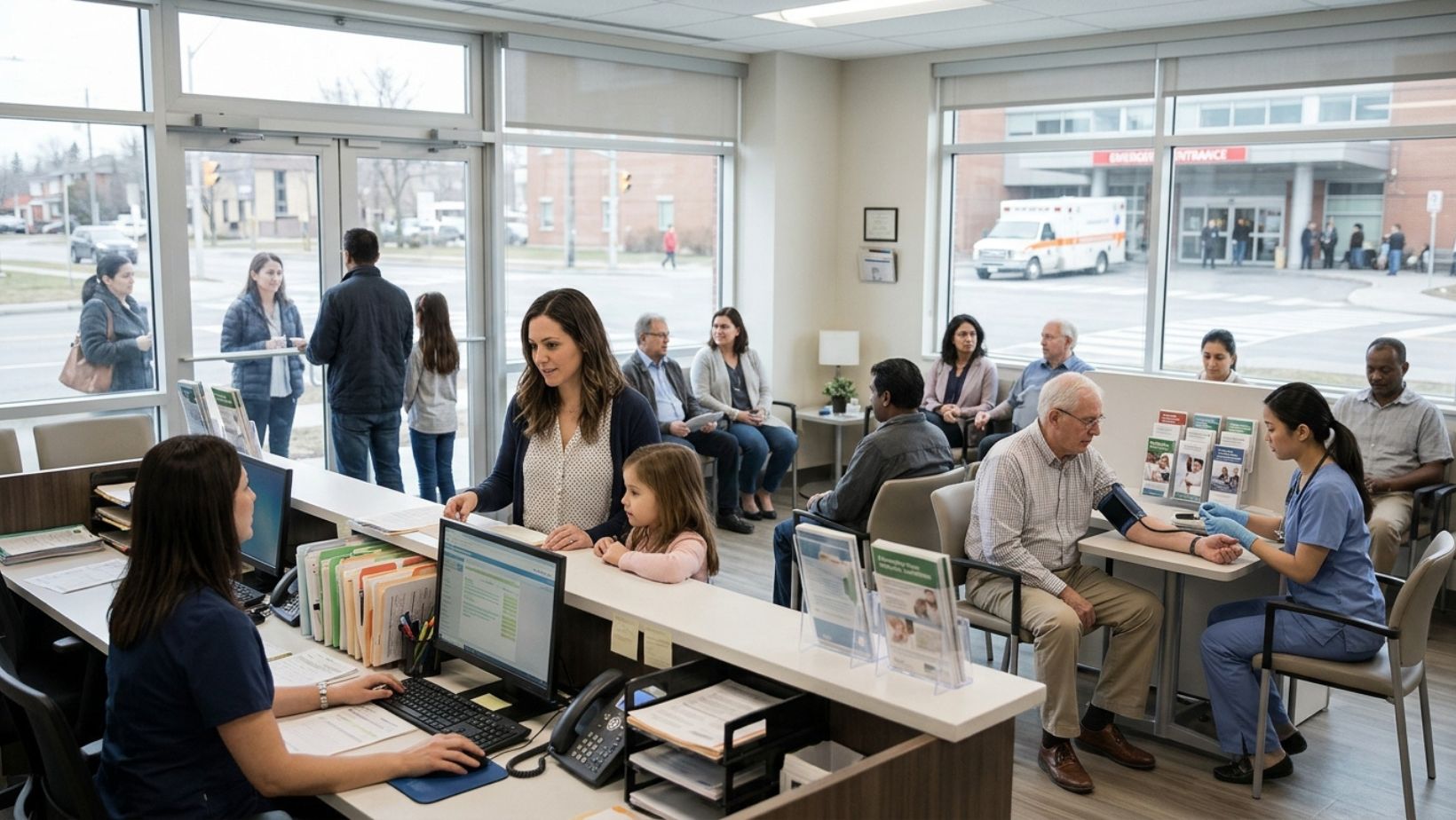
The evidence on primary care and health outcomes is among the most consistent in all of health systems research. Populations with strong primary care infrastructure have lower rates of preventable hospitalization, better chronic disease management outcomes, lower rates of emergency department use for conditions that could have been managed in a clinic, and better long term health equity across income and geographic lines.
Canada’s primary care access challenges are therefore not simply a matter of patient inconvenience. They are a measurable driver of health system strain and of inequitable health outcomes across the country. The millions of Canadians who do not have a regular primary care provider are more likely to delay seeking care until conditions are more advanced, more likely to use emergency departments for concerns that could have been addressed earlier in a clinic, and less likely to receive the preventive care that reduces their risk of developing serious conditions in the first place.
Family medicine physicians are the cornerstone of primary care capacity in most Canadian communities, which means that the ongoing shortage of family medicine practitioners in many regions is not just a specialty workforce problem. It is a system level health equity problem with consequences that cascade through every other part of the healthcare system.
MDconsultants has written directly about this issue in the context of broader health system pressures. Their published piece on Healthcare Workforce Challenges in Canada is worth reading alongside this guide for a fuller picture of how physician supply constraints are affecting care access across the country.
Family Medicine and Consulting Roles Beyond the Clinic
One dimension of family medicine that is less often discussed publicly is the growing role of family medicine trained physicians in healthcare consulting, health system advisory work, and organizational leadership. The clinical breadth of family medicine training, combined with the deep understanding of primary care workflows, patient populations, and system navigation that comes from years of practice, makes family medicine physicians particularly well suited to advisory roles that require thinking across the full care continuum.
Family medicine physicians who move into consulting work bring a perspective that narrower specialties cannot always provide. They understand how primary care connects to specialist care, emergency medicine, preventive services, and community health in a way that is grounded in lived clinical practice rather than theoretical system design. This makes their input especially valuable when organizations are designing primary care programs, evaluating access models, or trying to understand why a care coordination initiative is not working as intended.
The Role of a Medical Consultant in Primary Care System Design
For healthcare organizations trying to improve primary care access, redesign service delivery models, or evaluate the effectiveness of their primary care programs, working with a medical consultant who has family medicine or primary care training brings a layer of clinical credibility to the process that administrative and analytical expertise alone cannot provide.
A medical consultant grounded in family medicine can help organizations identify which elements of a proposed primary care model are clinically workable and which will fail at the point of implementation because they do not account for how patients and providers actually behave in a primary care environment.
Healthcare Consulting and Primary Care Innovation
Healthcare consulting in the primary care space has grown significantly as health systems across Canada recognize that improving access and quality at the primary care level is one of the highest leverage investments available. A healthcare consultant who understands family medicine can advise on team based care models, scope of practice optimization, panel size and capacity planning, and the design of chronic disease management programs that actually reduce specialist referral volume and emergency department utilization.
For current research on primary care performance and access in Canada, the Canadian Institute for Health Information provides comprehensive national data on primary care utilization, unattachment rates, and health outcome indicators that are essential context for any primary care system planning process.
Medical Consultant Networks and Family Medicine Expertise
A medical consultant network that includes family medicine physicians and primary care specialists can provide organizations with the kind of frontline clinical perspective that system planners and administrators often lack. MDconsultants includes a substantial number of family medicine consultants across Canada, including physicians with backgrounds in urban, rural, and community primary care settings, available to support health system planning, program evaluation, and clinical advisory work.
Final Thoughts
Primary care and family medicine are closely related but distinct concepts. Primary care is the system level function, and family medicine is the specialty most responsible for delivering it in Canada. Understanding the difference matters for patients navigating care, for organizations designing services, and for policymakers trying to address the access gaps that are among the most consequential challenges facing the Canadian health system today.
Whether you are trying to understand what your own family medicine physician does, or whether you are a healthcare leader trying to build a more effective primary care strategy, getting the distinction right is the starting point for every useful conversation that follows.
If you are looking to connect with experienced family medicine or primary care consultants, or to explore physician led consulting support for your organization, MDconsultants offers a trusted network of medical professionals ready to help.

