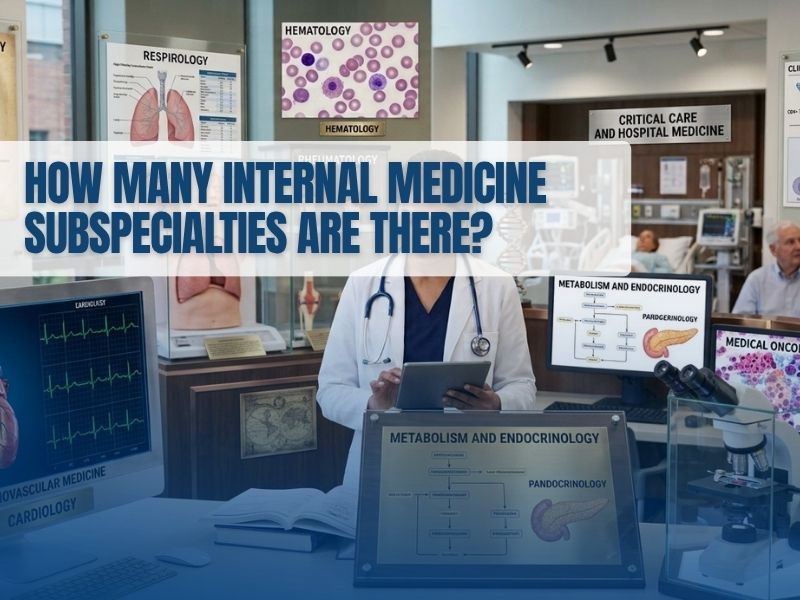
The subspecialties of internal medicine are the focused areas of clinical practice that physicians pursue after completing their core internal medicine residency training. In Canada, the Royal College of Physicians and Surgeons of Canada recognizes more than a dozen distinct subspecialties of internal medicine, including cardiology, gastroenterology, nephrology, rheumatology, endocrinology, hematology, respirology, infectious diseases, medical oncology, geriatric medicine, critical care medicine, and clinical immunology and allergy. Each of these subspecialties of internal medicine requires a physician to complete an additional fellowship of one to three years beyond their general internal medicine certification before they are eligible to practice in that focused area.
If you have ever been referred to a specialist and wondered exactly what kind of physician you were being sent to see, or if you are a medical student trying to map out the landscape of internal medicine training options, you are asking questions that this guide is designed to answer clearly. Some of the most commonly searched follow up questions on this topic include: What is the difference between an internist and a subspecialist? How long does it take to become a cardiologist or gastroenterologist in Canada? Are all subspecialties of internal medicine equally competitive to match into? What does a rheumatologist actually do versus a nephrologist? Which internal medicine subspecialties are most in demand in Canada right now? Let us work through all of these one by one.
The Subspecialties of Internal Medicine Explained

Before diving into individual fields, it helps to understand the structure that connects them. Internal medicine itself is the specialty focused on the diagnosis, treatment, and prevention of adult disease across all organ systems. A general internist, sometimes called a hospitalist or a general internal medicine physician, manages a broad range of adult conditions without restricting to one body system. The subspecialties of internal medicine emerge when a physician decides to develop deep expertise in one particular system or disease category and pursues fellowship training to build that focused competency.
Cardiology is among the most recognized subspecialties of internal medicine and focuses on diseases of the heart and vascular system. Cardiologists diagnose and manage conditions including coronary artery disease, heart failure, arrhythmias, valvular disease, and cardiomyopathy. Within cardiology, there are further subspecialization pathways including interventional cardiology, electrophysiology, and advanced heart failure, each requiring additional procedural training.
Gastroenterology is the subspecialty of internal medicine devoted to the digestive system, including the esophagus, stomach, small intestine, large intestine, liver, gallbladder, and pancreas. Gastroenterologists perform endoscopic procedures, manage inflammatory bowel disease, conduct colorectal cancer screening, and treat complex liver conditions including cirrhosis and viral hepatitis.
Nephrology focuses on kidney disease, including chronic kidney disease, acute kidney injury, glomerulonephritis, and the management of patients requiring dialysis or kidney transplantation. Nephrologists also manage electrolyte and acid base disorders that arise in complex inpatient settings.
Rheumatology addresses inflammatory and autoimmune conditions affecting the joints, muscles, and connective tissues. Rheumatologists diagnose and manage conditions such as rheumatoid arthritis, lupus, ankylosing spondylitis, vasculitis, and gout. This subspecialty of internal medicine has grown significantly as biologic and targeted therapies have expanded treatment options for previously difficult to manage inflammatory conditions.
Endocrinology and metabolism covers hormonal conditions and metabolic diseases including diabetes, thyroid disorders, adrenal disease, pituitary conditions, osteoporosis, and reproductive endocrinology. Endocrinologists work closely with primary care providers to manage chronic hormonal conditions that require ongoing specialist oversight.
Respirology, known as pulmonology in some other countries, focuses on diseases of the lungs and respiratory system. Respirologists manage asthma, chronic obstructive pulmonary disease, interstitial lung diseases, pulmonary hypertension, and sleep disordered breathing, among other conditions. Many respirologists also perform bronchoscopy and other diagnostic procedures.
Which Subspecialties of Internal Medicine Are Most in Demand

This is the question that medical students and residents researching the subspecialties of internal medicine ask most often, and it is worth answering honestly rather than generically.
Hematology encompasses diseases of the blood, including anemias, bleeding and clotting disorders, and blood cancers such as leukemia, lymphoma, and multiple myeloma. Hematologists may practice in a combined hematology and medical oncology model, or focus specifically on benign hematological conditions depending on their training and practice setting.
Medical oncology focuses on the systemic treatment of cancer, including chemotherapy, targeted therapy, immunotherapy, and hormonal therapies. Medical oncologists collaborate closely with surgical oncologists, radiation oncologists, and palliative care teams as part of multidisciplinary cancer care teams.
Infectious diseases is a subspecialty of internal medicine focused on the diagnosis and management of complex bacterial, viral, fungal, and parasitic infections. Infectious disease physicians provide consultation on difficult to treat infections, manage patients with HIV, and advise on antibiotic stewardship programs. The importance of this subspecialty was underscored significantly during the COVID-19 pandemic, and demand for infectious disease expertise continues to grow.
Geriatric medicine focuses on the complex medical needs of older adults, particularly those with multiple chronic conditions, frailty, cognitive impairment, and functional decline. Geriatricians work in inpatient, outpatient, and long term care settings, and their expertise is increasingly critical as Canada’s population ages.
Critical care medicine is a subspecialty of internal medicine that focuses on the management of life threatening illness in intensive care unit settings. Critical care physicians, also called intensivists, manage patients on mechanical ventilation, patients in septic shock, and others whose conditions require continuous monitoring and intervention.
Clinical immunology and allergy addresses immune mediated conditions including primary immune deficiencies, severe allergic disease, and complex immune dysregulation syndromes. This subspecialty sits at the intersection of internal medicine and immunological science.
The subspecialties of internal medicine that are consistently most competitive in the Canadian Resident Matching Service match include cardiology, gastroenterology, and medical oncology, all of which receive significantly more qualified applicants than available fellowship positions each year. Geriatric medicine and general internal medicine, by contrast, have faced recruitment challenges in many regions, reflecting broader healthcare workforce pressures that have been well documented across the Canadian health system. MDconsultants has published a detailed look at these pressures in their article on Healthcare Workforce Challenges in Canada, which is worth reading for context on how specialty distribution gaps are affecting care delivery.
How Subspecialties of Internal Medicine Connect to Consulting Work
One dimension of the subspecialties of internal medicine that is often overlooked in clinical training discussions is how specialist expertise translates into consulting, advisory, and organizational roles beyond direct patient care.
Physicians with subspecialty training in subspecialties of internal medicine are increasingly sought by healthcare organizations, pharmaceutical companies, health technology companies, and health policy bodies for their clinical expertise in areas where evidence based guidance is critical. A cardiologist advising on the clinical validity of a cardiac monitoring device, a gastroenterologist contributing to a pharmaceutical submission for a new inflammatory bowel disease therapy, or a nephrologist reviewing a dialysis quality improvement program are all examples of how specialist knowledge in the subspecialties of internal medicine extends into consulting and advisory work.
This intersection between clinical expertise and organizational advisory roles is exactly where a medical consultant with subspecialty training adds distinct value. The clinical depth that comes from fellowship training and years of specialist practice translates into credibility and precision that organizations cannot access through generalist advisors alone.
The Role of Healthcare Consulting in Subspecialty Program Development
Healthcare consulting in the subspecialty space has grown as hospitals and health networks recognize the need for expert clinical guidance when developing or evaluating specialty programs. A healthcare consultant with subspecialty internal medicine training can advise on program structure, clinical protocols, referral pathway design, and the evidence base for specific treatment approaches in ways that administrative consultants without clinical backgrounds cannot replicate.
For comprehensive, authoritative information on the subspecialties of internal medicine recognized in Canada and the fellowship requirements for each, the Royal College of Physicians and Surgeons of Canada is the definitive national reference and the appropriate starting point for any physician exploring subspecialty training pathways.
Medical Consultant Networks and Internal Medicine Expertise
A medical consultant network that includes physicians trained across the full range of subspecialties of internal medicine can provide healthcare organizations, pharmaceutical companies, and health technology firms with the specific clinical perspective they need for complex advisory projects. These networks connect organizations with the right subspecialist expertise efficiently, without requiring organizations to maintain those relationships independently.
MDconsultants includes consultants with backgrounds across internal medicine and its subspecialties, offering healthcare organizations and industry partners access to grounded, clinically credible expertise across a wide range of therapeutic areas and system contexts.
Final Thoughts
The subspecialties of internal medicine represent one of the richest and most varied training pathways in Canadian medicine, offering physicians the opportunity to develop deep expertise in a focused area while remaining grounded in the broad clinical foundation that general internal medicine provides. Whether you are a medical student choosing a fellowship direction, a patient trying to understand your referral, or a healthcare organization looking for subspecialty clinical expertise, understanding the landscape of subspecialties of internal medicine gives you a clearer map of how adult specialist medicine in Canada is structured and how to navigate it effectively.
If you are looking to connect with experienced subspecialist physicians or explore physician led consulting support for your organization, MDconsultants offers a trusted network of medical professionals ready to help.