

Health Technology Assessment is a structured, evidence-based process used to evaluate the clinical effectiveness, safety, cost-effectiveness, and broader social implications of health technologies before they are publicly funded or widely adopted within a healthcare system. In Canada, Health Technology Assessment informs decisions made by federal and provincial drug and device review bodies about which treatments, diagnostics, and medical devices should be covered under public health plans. Physicians encounter the results of Health Technology Assessment every time a new drug is listed on a provincial formulary, a diagnostic tool is approved for clinical use, or a treatment protocol is updated to reflect new clinical evidence.
If you are a physician who has ever wondered why a medication you wanted to prescribe was not covered, why a new device took years to reach routine clinical use after its approval, or how health systems decide which technologies deserve funding in the first place, you are asking questions that sit squarely within the domain of HTA. Commonly searched follow-up questions include: Who conducts health technology assessments in Canada? What types of evidence does an HTA consider? How does HTA affect drug coverage decisions? Can physicians influence an HTA process? How long does a health technology assessment take? This guide answers each of those questions so you can understand not just what HTA is, but why it matters to you directly.
What Is a Health Technology Assessment
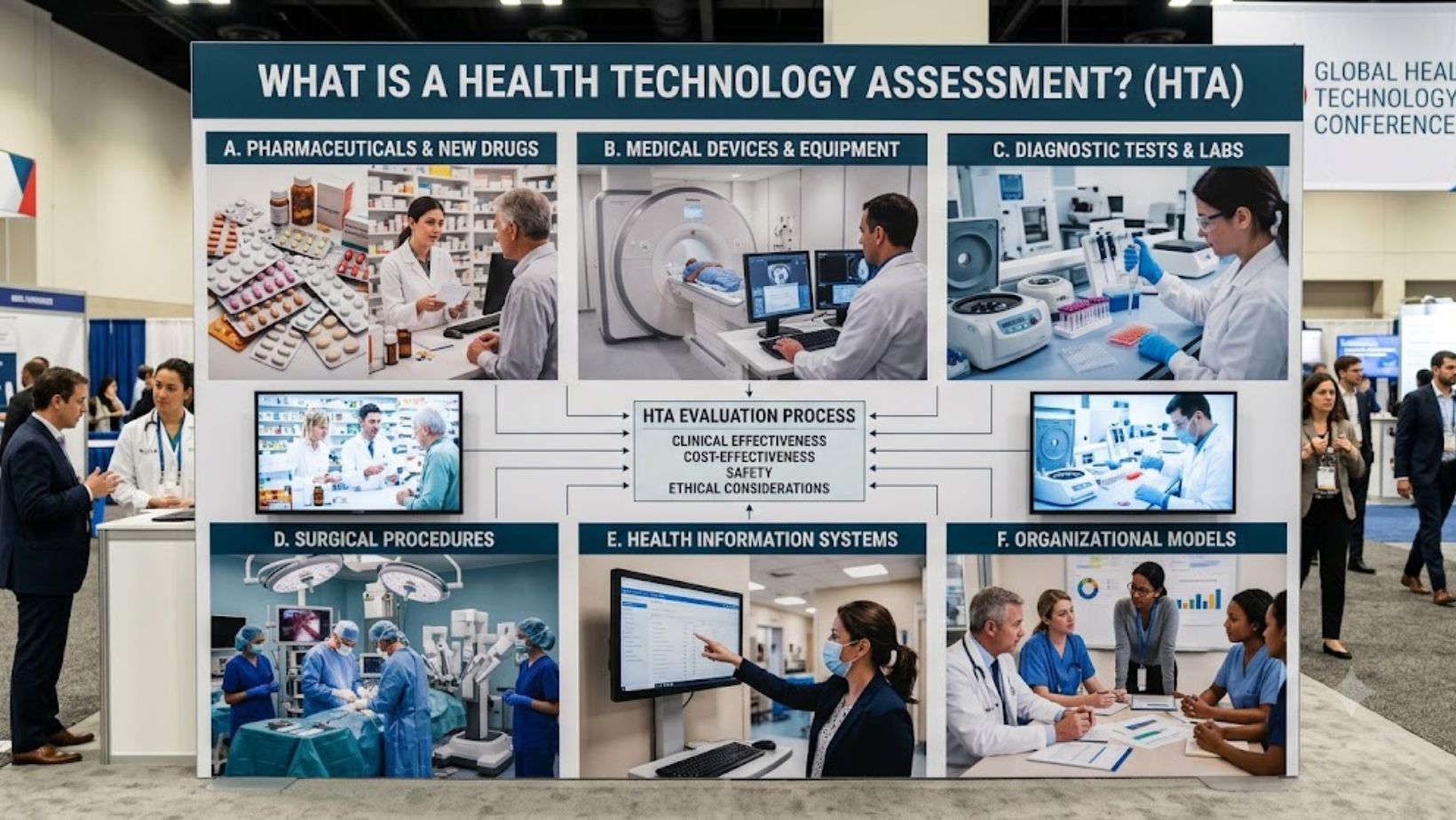
Let us start at the beginning, because the term itself is broader than most people realize. A health technology assessment does not only apply to new drugs. The word technology in this context refers to any intervention used in healthcare, including pharmaceuticals, medical devices and equipment, diagnostic tests, surgical procedures, health information systems, and even organizational models of care delivery. If it is used to prevent, diagnose, treat, or manage a health condition, it falls within the scope of what a health technology assessment can evaluate.
The assessment itself is not a single test or a single document. A health technology assessment is a multi-dimensional review process that draws on clinical evidence from randomized controlled trials, systematic reviews, and real-world data, as well as health economic modeling, patient and caregiver perspectives, and ethical and social considerations. The goal is to answer a deceptively simple question: does this technology work, for whom, at what cost, and compared to what alternative?
In Canada, several organizations conduct or coordinate health technology assessment work at different levels of the healthcare system. The Canadian Drug Policy Agency, formerly known as the Canadian Drug Review, conducts federal-level reviews of new drugs and provides formulary listing recommendations to provincial drug plans. The Canadian Medical Devices Coordination Group coordinates device assessments across jurisdictions. Individual provinces also conduct their own assessments, particularly for technologies that fall outside federal review mandates or that require province-specific context to evaluate appropriately.
Why Health Technology Assessment Matters for Physicians
Here is the part most physicians do not fully appreciate until they are on the receiving end of it: HTA decisions shape what you can actually offer your patients. You might prescribe the best available treatment for a condition, but if that treatment has not gone through a health technology assessment and received a positive recommendation, it may not be covered under your patient’s provincial drug plan. That gap, between what is clinically effective and what is publicly funded, is directly created by the HTA process and its outcomes.
Understanding health technology assessment therefore gives you a clearer picture of why certain clinical options are available to your patients and others are not. It also positions you to engage meaningfully when the system gets it wrong, when a technology with strong clinical evidence receives a negative or conditional HTA recommendation based on economic modeling that does not reflect real-world clinical practice, or when a patient population is underrepresented in the evidence base that informed the review.
Physicians who understand how health technology assessment works are also better positioned to contribute to it, through clinical expert input during formal consultations, through research that generates the kind of evidence HTA bodies need, and through advocacy for patients whose conditions are poorly served by existing funding decisions.
How the Health Technology Assessment Process Works in Practice
If you have never been through an HTA process, it can feel opaque from the outside. So let us walk through it in plain language.
A health technology assessment typically begins when a manufacturer, health authority, or government body submits a request for a technology to be reviewed. For new drugs, the manufacturer submits a detailed dossier to the reviewing body that includes clinical trial data, comparative effectiveness information, and a health economic model projecting the cost-effectiveness of the technology relative to existing alternatives.
The reviewing body then evaluates this submission against a structured set of criteria. Clinical experts, which often includes practicing physicians with relevant specialty expertise, are consulted to assess whether the clinical evidence is credible, whether the comparator chosen in the economic model reflects real-world clinical practice, and whether there are patient populations or use cases that the manufacturer’s submission may have missed or underrepresented.
Patient and caregiver groups are also increasingly incorporated into health technology assessment processes, contributing perspectives on what outcomes matter most to people living with the condition being treated, which can differ meaningfully from the outcome measures emphasized in clinical trials.
Once the review is complete, the HTA body issues a recommendation. For drugs, this may be a recommendation to list on provincial formularies under specific conditions, to not list, or to list only for a defined patient population. For devices and procedures, recommendations similarly guide whether and how technologies are adopted within health systems.
The Role of Health Economics in Health Technology Assessment

One of the most important and least understood components of a health technology assessment is the economic evaluation. For most physicians, health economics is not a significant part of medical training, yet economic evidence plays a central role in determining whether a technology they might want to use reaches their patients.
The most common economic measure used in health technology assessment is the incremental cost-effectiveness ratio, or ICER. This figure expresses how much it costs to gain one additional unit of health benefit, typically measured in quality-adjusted life years, by using the new technology instead of the existing standard of care. HTA bodies in Canada generally consider technologies with ICERs below a certain threshold to be cost-effective, though the threshold used varies and is not always transparently disclosed.
This is where physicians can play an important advocacy role. Economic models used in health technology assessment are built on assumptions, and some of those assumptions, such as how patients are treated in practice, what the real-world comparator actually is, or how outcomes are measured beyond a trial setting, are things that practicing physicians are uniquely positioned to challenge and correct.
How Physicians Can Engage With Health Technology Assessment Processes
You might be surprised to learn how accessible HTA processes are to physician input. Many health technology assessment bodies formally invite clinical expert consultation during their reviews, and individual physicians with relevant expertise can participate directly.
If a technology in your area of practice is under review, reaching out to the reviewing body or to your specialty society is a practical first step. Specialty societies often coordinate physician input into health technology assessment consultations, helping ensure that the clinical perspective represented in reviews reflects the realities of practice rather than only the evidence package submitted by manufacturers.
Working with a medical consultant who has experience in HTA processes can also be valuable, particularly for physicians who want to contribute to reviews but are unfamiliar with how submissions are structured or what evidence HTA bodies find most persuasive. A medical consultant can help translate clinical expertise into the kind of structured, evidence-focused input that carries weight within a formal review process.
Healthcare Consulting and the Growing Demand for HTA Expertise
Healthcare consulting in the area of health technology assessment has grown significantly as both industry and health system stakeholders recognize how consequential HTA decisions are for market access, clinical adoption, and patient outcomes. A healthcare consultant with HTA expertise advises pharmaceutical and device companies on how to structure their submissions, models the economic arguments most likely to support a positive recommendation, and helps organizations navigate the consultation and appeals processes that follow initial HTA decisions.
For health systems and hospitals, HTA-focused healthcare consulting supports internal assessment processes for technologies that require local evaluation, as well as organizational decision-making about whether to adopt technologies that have received conditional or negative recommendations at the national level but may still have clinical value in specific patient populations or care settings.
For additional background on how health technology assessment is structured and governed in Canada, the Canadian Health Technology Assessment body, now known as the Canadian Drug Policy Agency, provides publicly accessible reports, methods guidance, and consultation information for all completed and ongoing reviews.
The Value of a Medical Consultant Network in HTA Decision Making
A medical consultant network that includes physicians with HTA experience, clinical research backgrounds, and specialty expertise across multiple therapeutic areas can be a powerful resource for organizations navigating complex technology assessment processes. These networks allow stakeholders to quickly identify the right clinical perspective for a given review, match that perspective to the specific evidence gaps or modeling assumptions being questioned, and deliver credible, well-organized input that genuinely influences assessment outcomes.
Final Thoughts
Health Technology Assessment is one of the most consequential processes in modern healthcare, shaping which treatments reach patients, which devices enter clinical practice, and how public health dollars are allocated across a system with finite resources. For physicians, understanding how this process works is not just a matter of professional curiosity. It is a practical tool for advocating for your patients, contributing to the evidence base that drives better decisions, and positioning yourself to engage meaningfully in a process that directly affects the care you can deliver.
The physicians who understand health technology assessment are the ones best equipped to challenge flawed recommendations, contribute valuable clinical input, and help ensure that the technologies reaching patients are the ones that actually work.
If you are looking to connect with experienced medical consultants or explore physician-led consulting support in health technology assessment and beyond, MDconsultants offers a trusted network of medical professionals ready to help.

