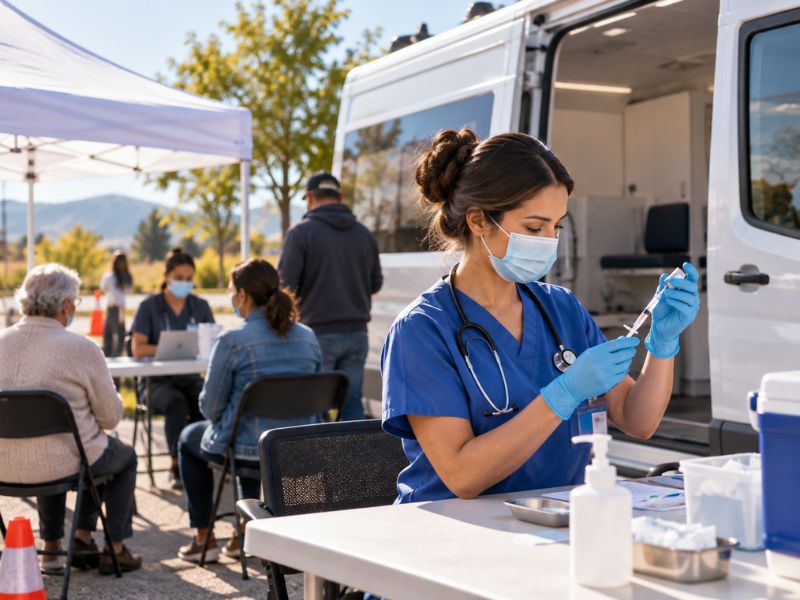
Pop-up vaccination clinics are temporary, community based immunization sites that are deployed to reach populations who face barriers accessing traditional clinic and pharmacy based vaccination services. Whether set up in community centers, faith institutions, transit hubs, school gymnasiums, or parking lots, pop-up vaccination clinics bring the vaccine to the community rather than expecting the community to navigate health systems that are often geographically, linguistically, or culturally inaccessible. When well designed and properly staffed, pop-up vaccination clinics can achieve vaccine uptake in communities that traditional outreach consistently misses, making them one of the most equity oriented tools available in public health.
If you are a public health planner, a community health organization, a healthcare administrator, or a clinician who has been involved in or is preparing for a vaccination campaign, the planning and staffing questions behind pop-up clinics are real and immediate. The most commonly searched questions on this topic include: How much advance planning does a pop-up vaccination clinic require? Who is legally authorized to administer vaccines at a pop-up clinic? What equipment and cold chain management is required? How do you reach the communities that need pop-up clinics most? What lessons did public health learn from COVID-19 mass vaccination about running mobile and pop-up sites? This guide answers all of these with the specificity you need to actually plan and execute.
What Are Pop-Up Vaccination Clinics and Why Do They Matter
Before getting into the operational details, it helps to be precise about what pop-up vaccination clinics actually are and how they differ from related models, because conflating them leads to planning errors.
Pop-up vaccination clinics are temporary, scheduled immunization events held at nontraditional venues. They are distinct from permanent public health clinics, which operate on fixed schedules from fixed addresses, and from pharmacy based vaccination programs, which are ongoing but limited to the pharmacy’s customer base and location. Pop-up clinics are also distinct from mobile vaccination units, which are clinics mounted in vehicles such as buses or vans that travel between sites on a scheduled route. However, in practice, the terms are used interchangeably in many public health communications, and the planning principles overlap substantially.
The rationale for pop-up vaccination clinics is grounded in health equity. The communities with the lowest vaccination rates are rarely the ones that lack awareness of vaccines. They are the ones for whom access is structurally difficult. These include shift workers who cannot attend a clinic during standard hours, elderly or mobility limited individuals who cannot travel far, newcomer and immigrant communities who are unfamiliar with or distrustful of formal healthcare institutions, residents of dense urban neighborhoods without personal transportation, and communities in rural and remote areas where the nearest permanent clinic may be an hour or more away.
The COVID-19 pandemic demonstrated both the potential and the operational complexity of pop-up vaccination clinics at an unprecedented scale. Many jurisdictions that quickly stood up large scale vaccination campaigns through temporary sites achieved high coverage rates through pop-up models in communities where outreach through traditional channels had consistently underperformed. The operational lessons from that period, including what worked and what caused the chaos that some early rollouts experienced, now form the evidence base on which good pop-up clinic planning rests.
How Pop-Up Vaccination Clinics Are Planned in Canada
Planning pop-up vaccination clinics well requires decisions across several interconnected domains, and underestimating any of them creates downstream problems that manifest as wasted vaccines, long lines, staff injuries, or missed target populations. Here is what a thoughtful planning process actually covers.
Site selection is the first and most consequential planning decision. The site for a pop-up vaccination clinic must be accessible to the target population by the transportation modes they actually use, not theoretically accessible by car. It must have adequate physical space for patient flow, including separate areas for registration, screening, vaccination, and observation. It should have climate control, accessible washrooms, and ideally existing trust within the community being served. A pop-up clinic held in a church hall with a pastor who is trusted by the congregation will outperform a pop-up clinic held in a government building that the same community associates with surveillance or enforcement, even if the government building has better facilities.
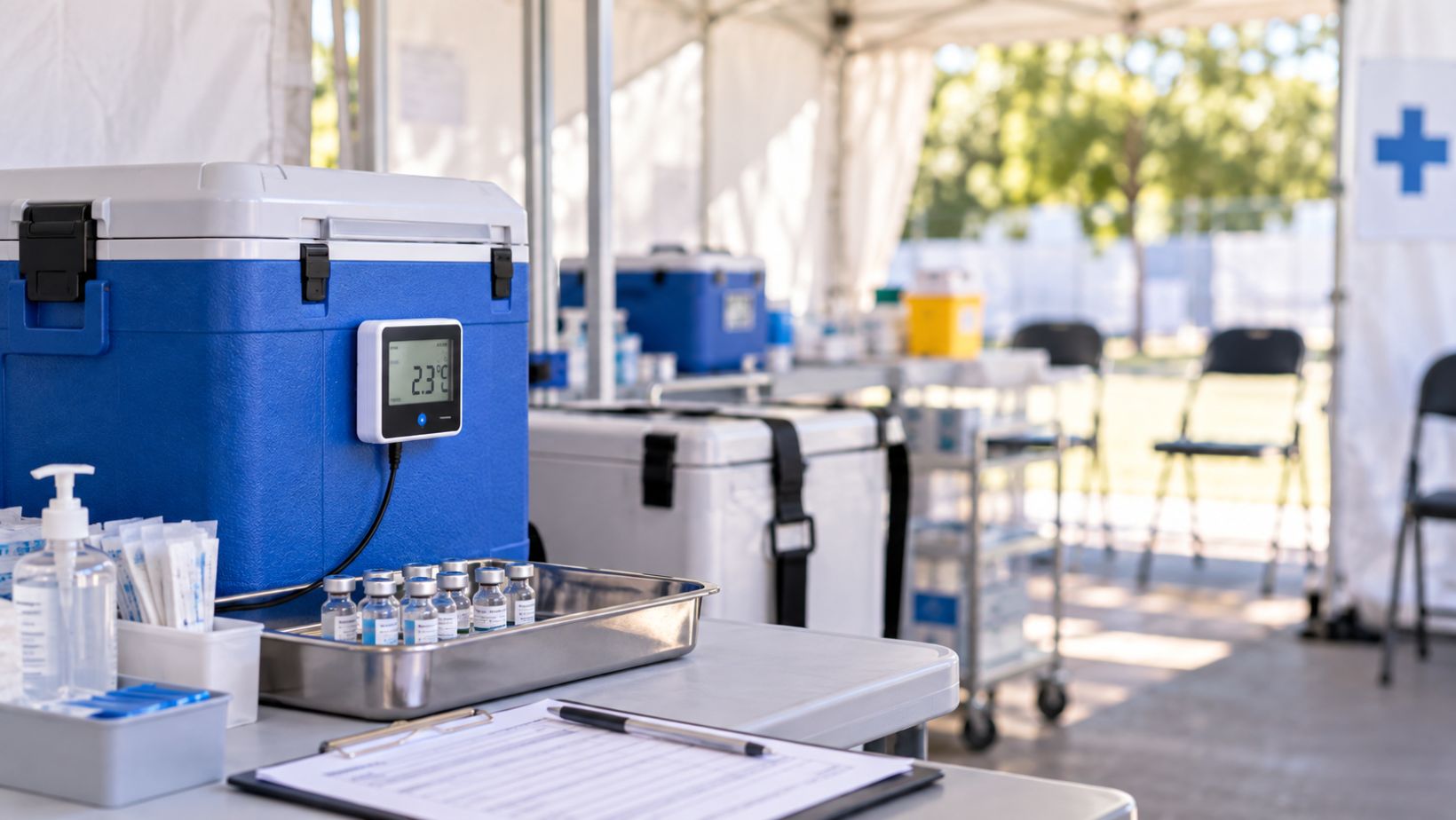
Vaccine logistics and cold chain management is a nonnegotiable operational requirement for pop-up vaccination clinics that carries both patient safety and resource implications. Different vaccines have different cold chain requirements, and the equipment, trained personnel, and monitoring processes needed to maintain appropriate storage temperatures from the distribution hub to the pop-up site and throughout the clinic must be in place before a single dose is drawn. Vaccine wastage from cold chain failure is costly, and in high demand campaigns it creates significant public health consequences beyond the financial loss.
Community engagement and communication must precede the clinic, not accompany it. Pop-up vaccination clinics that are announced the week they are scheduled to run, without prior community engagement, consistently underperform relative to those where trusted community organizations, faith leaders, and cultural liaisons were involved in planning and outreach from the beginning. This engagement work takes time and genuine relationship, not a translated poster dropped off at a community center three days before the clinic date.
Registration and patient flow design determines whether the clinic experience is smooth and efficient or whether it becomes the chaos that undermines confidence and future participation. Registration systems should be accessible to people without smartphones and without prior registration requirements where possible, since mandatory pre registration systematically excludes the most marginalized individuals pop-up clinics are trying to reach. Patient flow through vaccination and the mandatory observation period should be designed to minimize crowding, manage the pace of throughput relative to staffing capacity, and allow for rapid escalation in the rare event of an adverse reaction.
Staffing Pop-Up Vaccination Clinics: Roles, Challenges, and Solutions
Staffing is the operational variable where pop-up vaccination clinics most frequently run into difficulty, and it is the area where public health organizations most often underinvest relative to the actual complexity of what they are asking workers to do.
The staffing model for a well run pop-up clinic typically includes several distinct roles that require different qualifications and training. Vaccine administrators must hold the provincial authority to administer vaccines, which in most Canadian provinces includes registered nurses, nurse practitioners, pharmacists, and in some jurisdictions licensed practical nurses and paramedics. The expansion of scope of practice for several of these professions during the COVID-19 pandemic created a larger pool of authorized vaccine administrators for pop-up vaccination clinics, but authorization alone does not equal competency. Administrators must be trained in the specific vaccines being offered, the screening questions required before administration, anaphylaxis recognition and management, and the documentation requirements that feed into provincial immunization registries.
Screening and registration staff handle patient intake, consent, and health questionnaire completion. These roles do not require clinical credentials in most jurisdictions, making them well suited to trained volunteers, community health workers, and administrative staff. However, they require specific training in the screening questions, privacy obligations, and escalation pathways when a patient discloses a contraindication or adverse history.
Observation staff monitor patients during the post vaccination observation period, which is typically fifteen minutes for most vaccines. These staff must be trained to recognize signs of adverse reactions, including anaphylaxis, and must have clear protocols for alerting vaccine administrators when intervention is needed. At minimum, every pop-up vaccination clinic must have at least one person trained in anaphylaxis management, including the use of epinephrine auto injectors, and must have an emergency response plan that accounts for the typically nonmedical nature of the venue.
Logistics and site management staff handle vaccine storage, supply replenishment, waste disposal, and site setup and breakdown. Their role is invisible to patients but critical to everything else functioning.
Cultural liaisons and language access staff are the frequently omitted element of pop-up vaccination clinic staffing that makes the difference in achieving genuine equity outcomes versus simply replicating access patterns in a different location. A clinic that cannot communicate effectively in the languages of the community it is trying to serve, or that does not have culturally competent staff who can address vaccine hesitancy questions with credibility, will not achieve the uptake its location suggests it should.
Equity Considerations at the Center of Pop-Up Vaccination Clinic Design
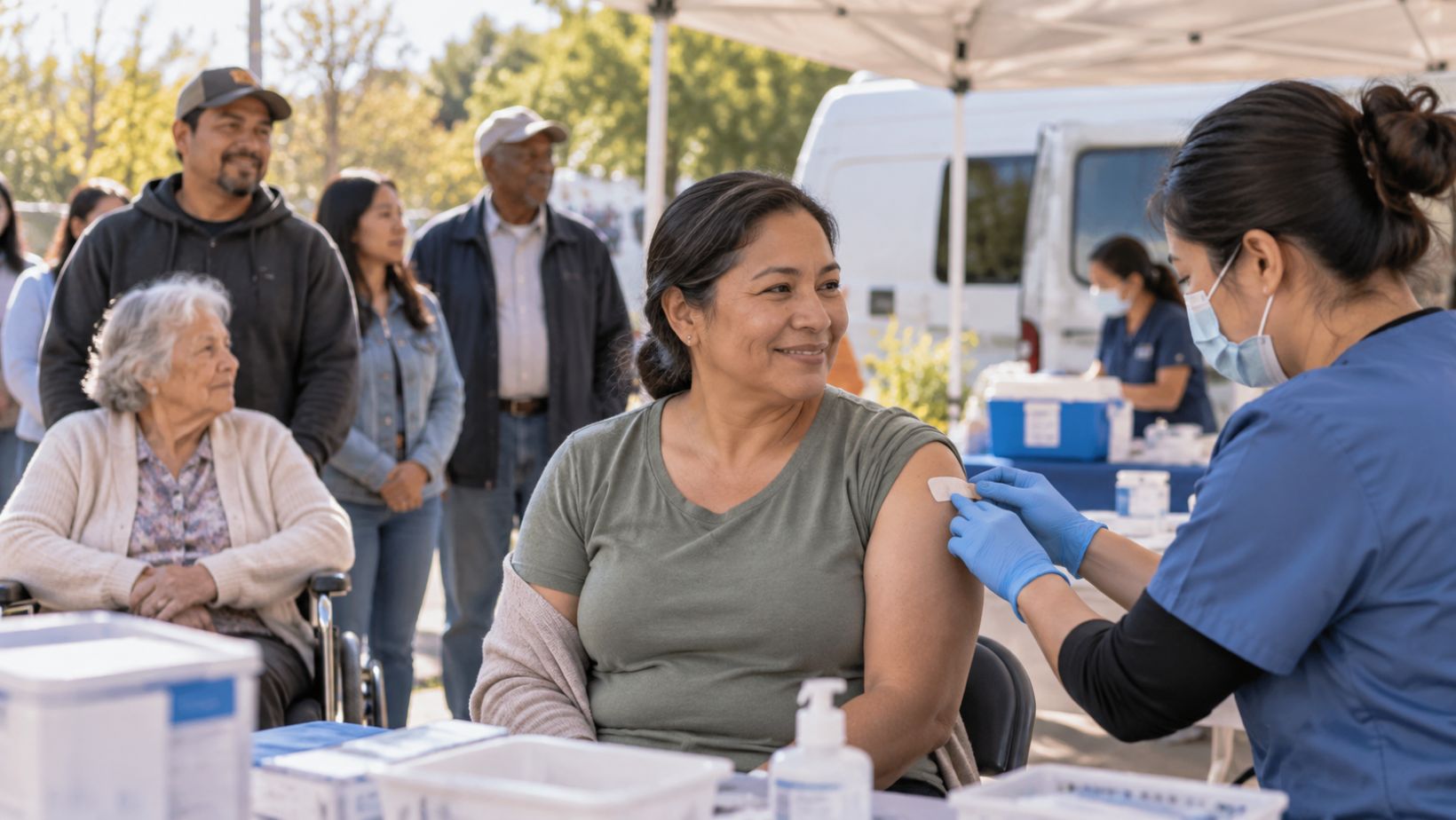
The equity potential of pop-up vaccination clinics is only realized when equity is built into the planning process from the beginning rather than added as an afterthought. This means that site selection, scheduling, staffing, registration design, and community engagement are all evaluated against the question of who will be reached and who will still be excluded if this decision is made this way.
Scheduling pop-up clinics during evening and weekend hours alongside standard business hours acknowledges that the shift workers and caregivers who most need accessible vaccination often cannot attend during weekday daytime slots. Designing registration processes that do not require government identification accommodates newcomers and individuals without secure housing status. Training staff in trauma informed approaches to patient interaction acknowledges that some of the communities with the lowest vaccination rates have historical reasons for distrust of healthcare institutions that a warm and respectful interaction can begin to address.
The allied healthcare professionals who frequently staff pop-up vaccination clinics, including pharmacists, registered nurses, licensed practical nurses, and paramedics, bring both the clinical competence and in many cases the community connection that makes these events successful. MDconsultants has written about the expanding scope of allied healthcare professionals and the critical role they play in extending care capacity beyond traditional settings, which is directly relevant to how pop-up clinic staffing models are evolving.
The Role of a Medical Consultant in Vaccination Clinic Planning
Organizations planning pop-up vaccination clinics at scale, particularly for large campaigns targeting specific populations or geographic areas, benefit from working with a medical consultant who understands immunization program design, occupational health and safety requirements for temporary clinical sites, and the regulatory framework governing vaccine administration across different professional scopes of practice.
Healthcare Consulting and Public Health Program Design
Healthcare consulting support for public health vaccination programs has grown significantly as health authorities recognize that the operational complexity of pop-up vaccination clinics at scale requires expertise that most public health teams are not resourced to develop internally in the compressed timelines that vaccine campaigns typically demand. A healthcare consultant with public health and emergency preparedness experience can advise on site selection criteria, staffing models, cold chain protocols, community engagement strategy, and the data collection systems needed to monitor coverage and equity outcomes in real time.
For authoritative guidance on vaccine administration standards, cold chain requirements, and population-based immunization program design in Canada, the Public Health Agency of Canada provides the national immunization guidelines and recommendations that should inform all pop-up vaccination clinic planning.
Medical Consultant Networks and Vaccination Program Expertise
A medical consultant network that includes public health physicians, emergency medicine clinicians, and community health specialists can provide organizations running pop-up vaccination clinics with clinical oversight capacity that small public health teams often cannot maintain internally, particularly during surge periods when clinic volumes are high and the pace of decision making is fast.
Final Thoughts
Pop-up vaccination clinics are not a logistically simple intervention that any organization can stand up with good intentions and a borrowed gymnasium. They are complex, equity oriented public health operations that require deliberate planning, properly qualified and trained staff, robust cold chain management, genuine community engagement, and systematic monitoring to deliver on their potential. When they are done well, they are among the most powerful access tools in public health. When they are done poorly, they waste vaccines, frustrate communities, and undermine the trust that future outreach depends on.
The difference between accessible and chaotic is not luck. It is planning, investment, and the right expertise at the right stage of the process.
If you are looking to connect with experienced medical consultants or explore physician-led consulting support for vaccination program design and public health operations, MDconsultants offers a trusted network of medical professionals ready to help.