
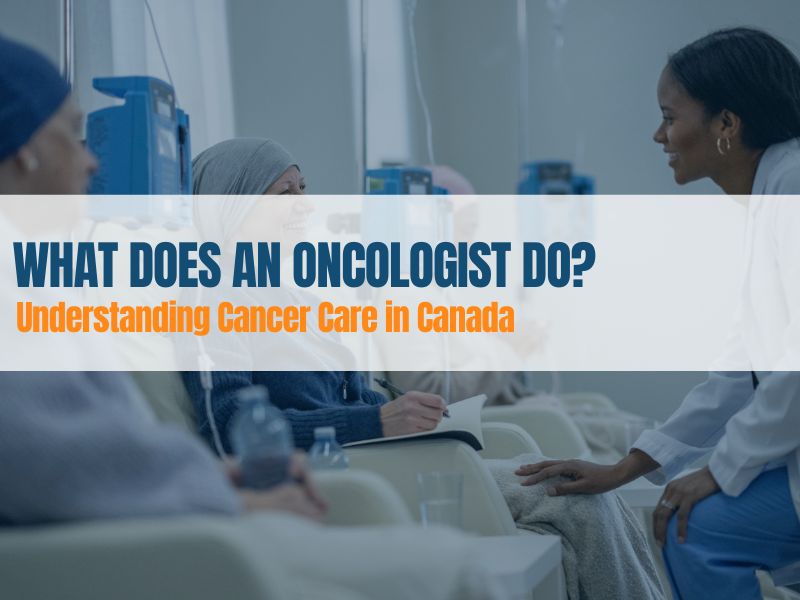
An oncologist is a physician who specializes in the diagnosis and treatment of cancer. What does an oncologist do? An oncologist evaluates patients with suspected or confirmed cancer diagnoses, develops individualized treatment plans using therapies such as chemotherapy, radiation, immunotherapy, targeted therapy, or hormone therapy, and monitors patients throughout and after treatment to assess response and manage side effects. In Canada, oncologists work within hospital-based cancer programs, academic health centres, and multidisciplinary cancer care teams, serving as the primary specialist responsible for guiding a patient through one of the most complex and consequential medical experiences of their life.
This is a question that many patients, families, and aspiring physicians find themselves asking, often at high-stakes moments. Some of the most commonly searched follow-up questions include: What are the different types of oncologists? Does an oncologist perform surgery? How is an oncologist different from a cancer surgeon? When should you see an oncologist? How long does it take to become an oncologist? What does an oncologist do after a patient finishes treatment? Each of these questions is answered in detail throughout this guide, giving you a thorough and accurate understanding of what an oncologist actually does and what their role means for patients and the healthcare system.
What Does an Oncologist Do Day to Day
The day-to-day work of an oncologist is more varied than most people imagine. A common assumption is that oncologists spend the majority of their time administering chemotherapy, but the reality of the role extends far beyond any single treatment modality.
In clinical practice, an oncologist begins the patient relationship at the point of diagnosis, reviewing pathology reports, imaging studies, and laboratory findings to confirm a cancer diagnosis and determine its stage. Staging refers to how far the cancer has spread and is one of the most critical pieces of information guiding treatment decisions. The oncologist synthesizes this information to recommend a treatment approach, which may involve a single therapy or a combination of several, sequenced and timed to maximize effectiveness while minimizing harm.
An oncologist working in medical oncology focuses on systemic treatments, meaning therapies that travel through the bloodstream to reach cancer cells throughout the body. Chemotherapy is the most well-known systemic treatment, but the field has expanded dramatically to include targeted therapies that attack specific molecular features of cancer cells, immunotherapies that harness the body’s own immune system to fight cancer, and hormone therapies for cancers driven by hormonal signals. Deciding which of these options is most appropriate for a given patient requires deep knowledge of cancer biology, pharmacology, and the individual patient’s health status and preferences.
Alongside treatment delivery, an oncologist manages the side effects and complications that cancer therapies produce, communicates with other specialists involved in a patient’s care, participates in tumour boards where complex cases are reviewed by multidisciplinary teams, and provides ongoing follow-up for patients who have completed treatment to monitor for recurrence and support long-term health.
The Different Types of Oncologist
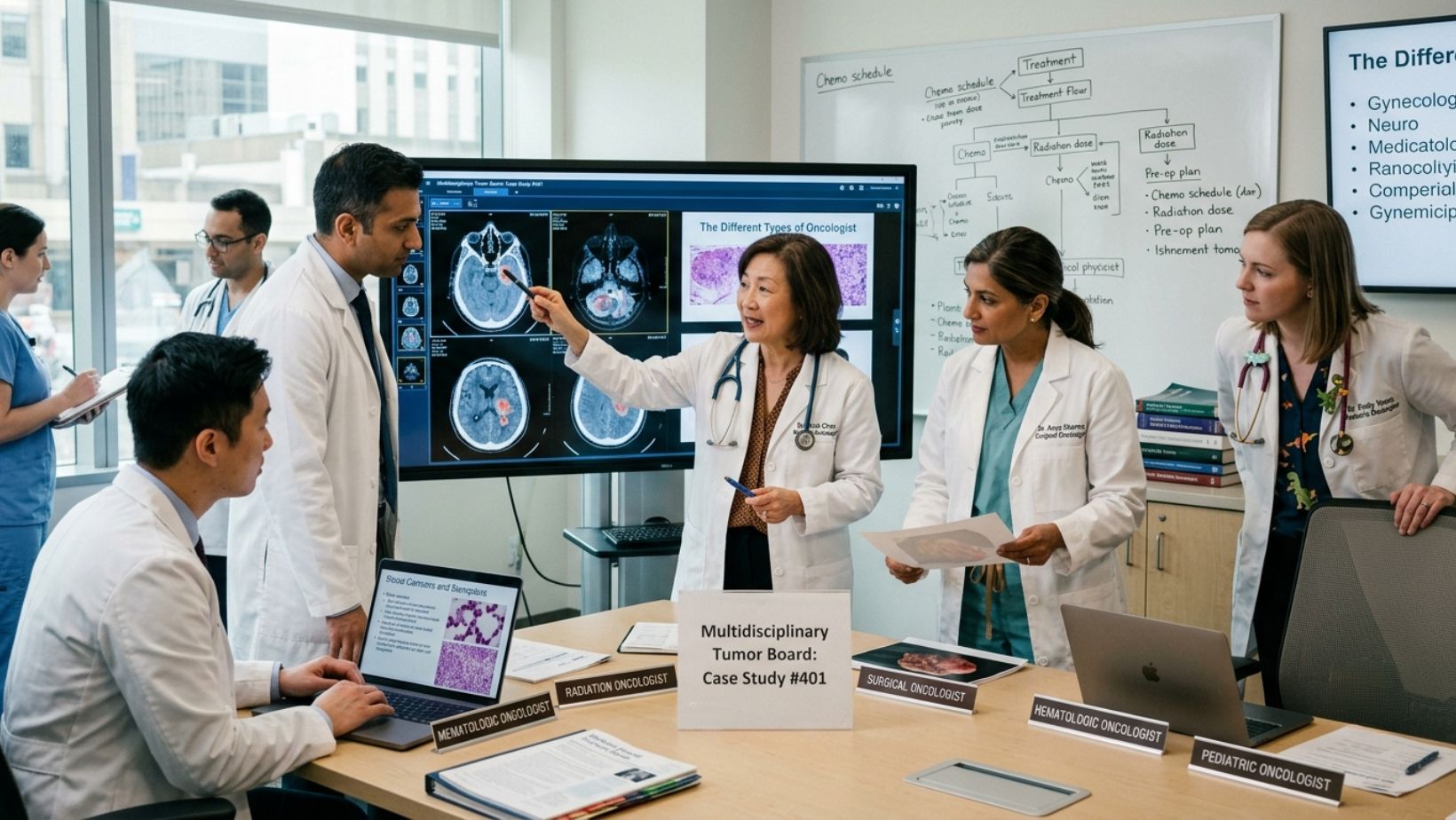
Not all oncologists do the same work, and understanding the different subspecialties within oncology helps clarify why a patient might be referred to one type of oncologist over another.
Medical oncology focuses on systemic drug-based treatments. A medical oncologist is often the central coordinating physician in a cancer patient’s care, particularly for solid tumors and hematologic malignancies.
Radiation oncology is a distinct specialty in which an oncologist uses high-energy radiation beams to target and destroy cancer cells. Radiation oncologists work closely with medical physicists and radiation therapists to design treatment plans that deliver precise doses of radiation to tumor tissue while minimizing damage to surrounding healthy structures. Radiation may be used as a primary treatment, in combination with chemotherapy, or as a palliative measure to relieve symptoms caused by advanced cancer.
Surgical oncology involves the surgical removal of tumors and surrounding tissue, and is practiced by surgeons with specialized training in cancer surgery rather than by oncologists trained in internal medicine. While surgical oncologists are essential members of the cancer care team, they are distinct from the medical or radiation oncologist who manages non-surgical treatment strategies.
Hematologic oncology focuses specifically on blood cancers including leukemia, lymphoma, and multiple myeloma. These conditions require a specialized understanding of the bone marrow, blood cell production, and blood-based treatment strategies such as stem cell transplantation. Gynecologic oncology, pediatric oncology, neuro-oncology, and thoracic oncology represent further subspecialized fields, each focused on cancers affecting a specific organ system or patient population.
How to Become an Oncologist
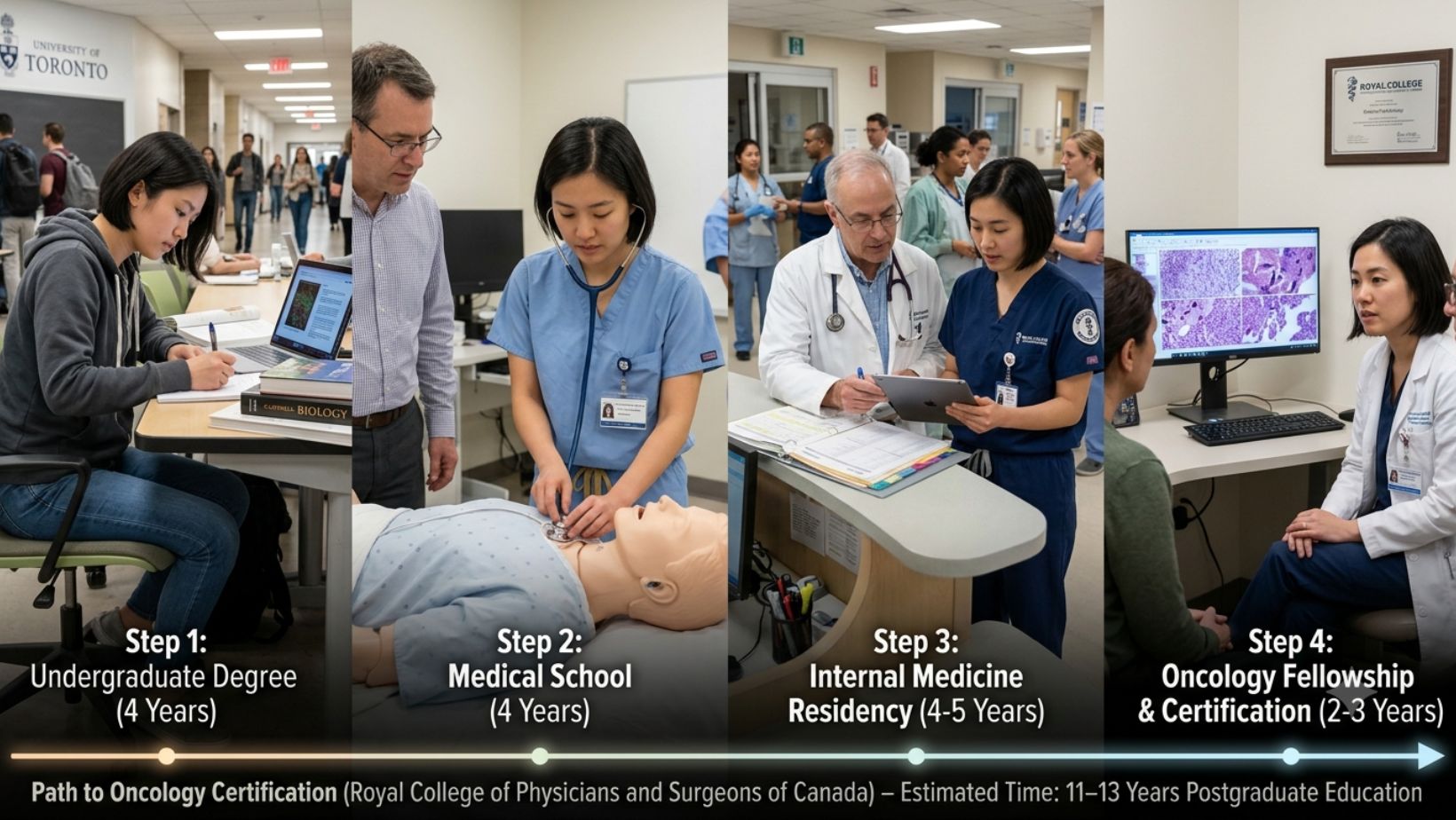
The path to becoming an oncologist in Canada is one of the longest and most academically demanding in medicine, reflecting the complexity and breadth of knowledge required to care for cancer patients effectively.
The journey begins with a four-year undergraduate degree, typically with a strong foundation in the biological sciences, followed by four years of medical school. After graduation, a physician pursuing medical oncology completes a residency in internal medicine spanning four to five years, before entering a fellowship in medical oncology of approximately two to three additional years. For those pursuing radiation oncology, a five-year residency in radiation oncology follows medical school directly.
In total, the path from starting medical school to completing training as a certified oncologist spans approximately eleven to thirteen years of postgraduate education, depending on the subspecialty chosen. This training is overseen by the Royal College of Physicians and Surgeons of Canada, which sets the competency standards and certification requirements for oncology as a recognized medical specialty.
During fellowship training, an oncologist develops expertise in interpreting cancer pathology and imaging, designing chemotherapy and immunotherapy regimens, managing oncologic emergencies, conducting and interpreting clinical research, and communicating difficult prognoses with patients and families. This last skill, while not a clinical procedure in the traditional sense, is among the most important and most carefully taught competencies in oncology training.
The Role of an Oncologist in Multidisciplinary Cancer Care
One of the defining features of modern cancer care is its multidisciplinary nature, and the oncologist sits at the centre of this model. A tumour board is a regularly scheduled meeting at which oncologists, surgeons, radiologists, pathologists, radiation therapists, nurses, and other specialists review complex cancer cases together and collectively determine the most appropriate management strategy.
This collaborative structure exists because no single specialty has all the answers in cancer care. A medical oncologist may identify a systemic treatment option, while a radiologist identifies imaging features that change the staging assessment, and a surgeon determines whether the tumor is resectable. The integration of these perspectives results in more informed, safer, and more effective treatment plans than any single specialist could produce independently.
The multidisciplinary model also underscores why the oncologist must be an effective communicator and collaborator, not only technically skilled in cancer pharmacology but capable of synthesizing diverse clinical inputs and translating complex decisions into guidance that patients and families can understand and act on.
Genetics is one area of oncology where multidisciplinary collaboration has become especially important. Cancer predisposition syndromes, hereditary cancers, and the growing use of genomic testing in treatment planning have made genetic counselors and genomics specialists essential members of the modern cancer care team. A compelling example of this expertise is Harriet Druker, MBA, MSc, a pioneer in paediatric cancer genetics who helped establish North America’s first paediatric Cancer Genetics Program at The Hospital for Sick Children in Toronto. With over 25 years of experience in genetic counselling, cancer diagnostics, and precision medicine, Harriet authored internationally recognized guidelines for paediatric cancer predisposition evaluation and has contributed to 38 peer-reviewed publications. Her career bridges clinical genetics, academic mentorship, and strategic healthcare consulting, representing the kind of multidisciplinary depth that strengthens cancer programs at an organizational level. Her full profile is available through MDconsultants, where specialists like Harriet connect with healthcare organizations seeking expert guidance in oncology and precision medicine.
What an Oncologist Does After Treatment Ends
Many patients assume that once active cancer treatment is complete, their relationship with their oncologist is largely finished. In reality, the post-treatment phase involves ongoing engagement that can span years or even decades.
After completing treatment, patients enter a surveillance phase during which the oncologist monitors for signs of cancer recurrence through scheduled imaging, laboratory tests, and clinical assessments. The frequency and duration of surveillance varies depending on the type of cancer, the stage at diagnosis, and the treatments received. For many cancer survivors, this monitoring continues for five years or more after treatment completion.
An oncologist also manages the long-term effects of cancer treatment, which can include cardiovascular complications from certain chemotherapy agents, hormonal changes from endocrine therapies, neuropathy, fatigue, and psychological impacts such as anxiety and depression. Survivorship care planning involves the oncologist working with a broader team to develop a personalized plan for managing these long-term effects and supporting overall health after cancer.
How a Medical Consultant Supports Cancer Care Organizations
Healthcare organizations building or improving cancer programs often benefit from the expertise of a medical consultant with oncology experience. A medical consultant can advise on program design, clinical pathway development, tumour board structure, and quality metrics that align with national cancer care standards, helping organizations deliver more coordinated and effective cancer services.
Healthcare Consulting in Oncology Services
Healthcare consulting plays a growing role in helping hospitals, cancer agencies, and health authorities optimize the delivery of oncology services. A healthcare consultant with cancer program expertise can support organizations in addressing wait time pressures, integrating new treatment modalities, and designing patient navigation systems that improve the experience of care for patients moving through complex cancer treatment pathways.
For up-to-date information on cancer statistics, treatment standards, and patient resources in Canada, the Canadian Cancer Society is the most comprehensive and credible national source available to both patients and healthcare professionals.
Medical Consultant Networks and Oncology Advisory Work
A medical consultant network that includes oncologists and cancer care specialists provides healthcare organizations with access to highly specialized clinical expertise for advisory, program evaluation, and quality improvement work. These networks are particularly valuable as precision oncology and immunotherapy continue to evolve at a pace that can be difficult for non-specialist administrators to follow without expert clinical input.
Final Thoughts
An oncologist is far more than a physician who prescribes chemotherapy. They are a deeply trained specialist who guides patients through one of the most challenging experiences imaginable, integrating complex scientific knowledge with compassionate, individualized care. Understanding what an oncologist does, the different types available, and what the path to this specialty involves helps patients navigate cancer care more confidently and helps aspiring physicians appreciate what this demanding and profoundly meaningful career path requires.
If you are looking to connect with experienced medical consultants or explore physician-led consulting support in Canada’s healthcare sector, MDconsultants offers a trusted network of medical professionals ready to help.