
EMR in healthcare stands for Electronic Medical Record, a digital version of a patient’s paper chart that contains their medical history, diagnoses, medications, treatment plans, immunization dates, allergies, laboratory results, and clinical notes, all stored within a single healthcare provider’s system. EMR in healthcare is used primarily within one practice or clinic, allowing healthcare providers to document, retrieve, and act on patient information more efficiently than paper-based systems allow. In Canada, the adoption of EMR in healthcare has been a national priority for more than two decades, with the goal of improving care coordination, reducing medical errors, and supporting better health outcomes across the country.
Patients and healthcare professionals researching this topic often ask a consistent set of related questions. Among the most commonly searched are: What is the difference between an EMR and an EHR? Is an EMR the same as an electronic patient record? Who can access a patient’s EMR? Are electronic medical records secure? How do EMRs improve patient safety? This guide answers each of these questions clearly, giving you a complete picture of what EMR in healthcare is and why it matters.
What Is Electronic Patient Record
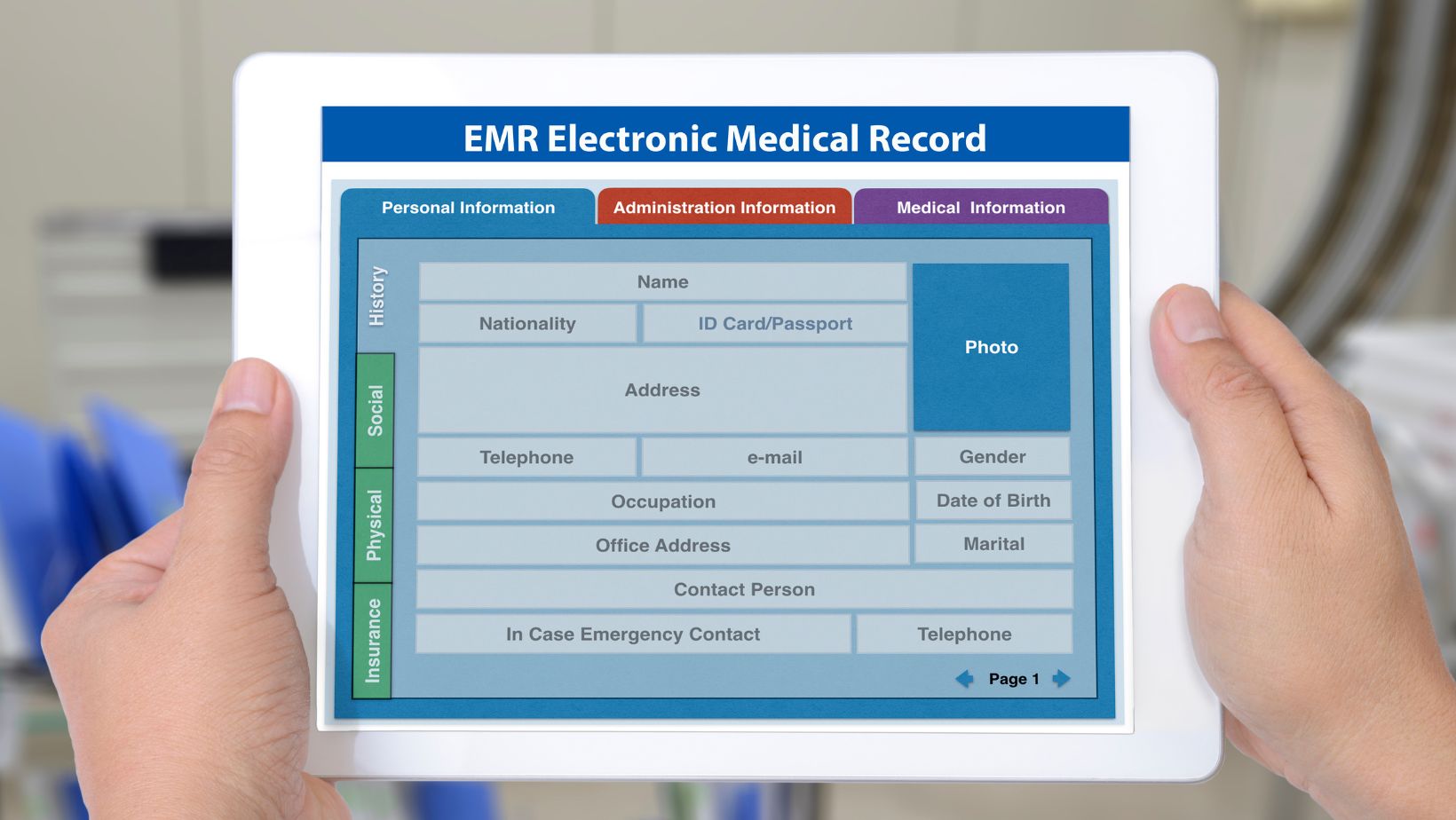
The terms electronic medical record, electronic patient record, and electronic health record are frequently used interchangeably, but they carry distinct meanings that are worth understanding, especially if you are navigating healthcare technology decisions for an organization or trying to make sense of what your own medical information looks like in a digital system.
An electronic patient record is a broad term that refers to any digital record containing information about a patient’s health and care. In practice, this term overlaps significantly with the concept of EMR in healthcare, and many healthcare organizations use them synonymously. The specific terminology used often depends on the country, institution, or software system in question rather than a meaningful clinical distinction.
An electronic health record, or EHR, is a more expansive concept than an EMR. While EMR in healthcare is typically confined to a single clinic or provider’s practice, an EHR is designed to aggregate patient information across multiple providers, facilities, and care settings into a more complete longitudinal health record. An EHR might include data from a patient’s family physician, a specialist they visited across town, the hospital where they had surgery, and the pharmacy that dispensed their medications, all accessible through a shared platform.
In Canada, the national vision for digital health has increasingly been oriented toward EHR infrastructure rather than isolated EMR systems, with organizations such as Canada Health Infoway leading efforts to connect provider systems and enable the kind of cross-organizational data sharing that an EHR model supports. However, for the majority of clinical interactions happening at the point of care in a physician’s office or clinic, EMR in healthcare remains the primary digital tool in use.
How EMR in Healthcare Works in Clinical Practice
Understanding how EMR in healthcare functions in a real clinical setting helps demystify what happens to your health information every time you visit a healthcare provider who uses a digital system.
When a patient arrives at a clinic, their demographic information, health history, and previous visit records are already stored within the EMR in healthcare system. The physician or healthcare provider does not need to review paper charts or ask the patient to recall medication names from memory. Instead, the encounter begins with a complete digital picture of the patient’s health history, including past diagnoses, current medications, known allergies, recent laboratory results, and any clinical notes from previous visits.
During the appointment, the provider documents the encounter directly within the EMR, recording the patient’s presenting concern, clinical findings, assessment, and plan. Prescriptions can be generated and sent electronically to a pharmacy, laboratory requisitions can be submitted digitally, and referral letters can be created and transmitted within the same system. At the end of the visit, the updated record is saved and immediately accessible for any subsequent care.
This workflow represents a significant improvement over paper-based systems, where information was often fragmented, illegible, or simply unavailable at the point of care. EMR in healthcare systems create a structured, searchable, and consistent record that supports better clinical decision-making and reduces the risk of errors caused by missing or miscommunicated information.
The Impact of EMR in Healthcare on Patient Safety

One of the most compelling arguments for EMR in healthcare adoption is its documented effect on patient safety. Medication errors, missed diagnoses, and adverse drug interactions are among the most preventable sources of patient harm in healthcare, and electronic records systems address each of these risks in meaningful ways.
EMR in healthcare systems typically include built-in clinical decision support tools that alert providers to potential drug interactions, contraindications based on a patient’s known allergies, and dosing recommendations adjusted for factors such as kidney function or body weight. These alerts function as a real-time safety check that paper systems cannot provide, catching potential errors before they reach the patient.
Legibility is another patient safety benefit that should not be underestimated. Handwritten clinical notes and prescriptions have historically been a source of transcription errors, misread drug names, and miscommunicated dosing instructions. Digital documentation eliminates this risk entirely, creating a clear, standardized record that any authorized provider can read accurately regardless of where or when it is accessed.
Population health management is a further benefit of EMR in healthcare that operates at a system level rather than an individual patient level. When EMR data is aggregated across a large patient population, it can be analyzed to identify trends, target preventive interventions, and measure the effectiveness of treatment protocols across entire patient cohorts. This capacity makes EMR in healthcare not only a clinical documentation tool but a strategic asset for healthcare organizations focused on improving outcomes at scale.
Challenges in EMR in Healthcare Adoption
Despite the clear benefits, the adoption of EMR in healthcare across Canada has not been without challenges. Interoperability remains one of the most significant barriers to realizing the full potential of digital health records. Many EMR systems used by individual clinics and hospitals are built on different platforms, use different data standards, and cannot easily communicate with one another, which limits the ability to share patient information across organizational boundaries.
This fragmentation means that a patient’s emergency department visit at one hospital may not be visible to their family physician’s EMR system, and vice versa. The clinical consequences can be significant: duplicate testing, missed medication histories, and uninformed prescribing decisions are all made more likely when providers lack access to a complete and current patient record.
Physician adoption and workflow integration are additional challenges. Implementing a new EMR in healthcare system requires substantial time investment from clinical staff for training and adjustment, and poorly designed systems can slow down clinical workflows rather than improving them. Physician burnout associated with administrative burden, including documentation within EMR systems, has become a recognized concern in Canadian healthcare, highlighting the importance of human-centred design in health technology development.
The Role of a Medical Consultant in EMR Implementation
Healthcare organizations implementing or transitioning between EMR in healthcare systems often benefit from working with a medical consultant who understands both the clinical workflows the system must support and the organizational change management required for a successful rollout. A medical consultant can bridge the gap between technology vendors and clinical staff, translating technical capabilities into practical clinical utility and ensuring that implementation decisions reflect the realities of care delivery rather than only administrative priorities.
Healthcare Consulting and Digital Health Strategy
Healthcare consulting has become an increasingly important resource for organizations navigating the complex landscape of health information technology. From selecting an appropriate EMR platform to designing interoperability strategies and training programs, a healthcare consultant with digital health expertise can support healthcare organizations at every stage of their EMR journey.
These engagements are particularly valuable for smaller or community-based organizations that lack dedicated internal health IT expertise but are nonetheless required to meet provincial and national standards for digital record-keeping and data sharing. According to Canada Health Infoway, the organization responsible for advancing digital health across Canada, well-implemented digital health tools have the potential to save the health system significant resources while improving both care quality and patient experience. More information on Canada’s national digital health strategy is available through Canada Health Infoway.
The Value of a Medical Consultant Network in Health Technology Decisions
A medical consultant network that includes physicians with health technology experience can provide healthcare organizations with practical, clinically grounded input on EMR selection, configuration, and optimization. These networks bring together professionals who have experienced digital health implementation from the frontlines of clinical practice, offering a perspective that purely technical or business-oriented consultants may not be able to provide.
Final Thoughts
EMR in healthcare has fundamentally transformed how patient information is captured, stored, and used across Canada’s healthcare system. From improving medication safety and clinical decision-making to enabling population health management and coordinated care, the benefits of well-implemented electronic medical records extend to every level of healthcare delivery.
As Canadian health systems continue to move toward greater interoperability and data-sharing capability, the role of EMR in healthcare will only grow in importance. Organizations and providers that invest in understanding, implementing, and optimizing their digital record systems today are building the infrastructure for safer, more connected care tomorrow.
If you are looking to connect with experienced medical consultants or explore physician-led consulting support for your organization’s digital health strategy, MDconsultants offers a trusted network of medical professionals ready to help.