
The Canadian Triage Acuity Scale, commonly referred to as CTAS, is a standardized clinical tool used in emergency departments across Canada to prioritize patient care based on the urgency of a presenting condition. The Canadian Triage Acuity Scale assigns patients to one of five levels, from Level 1, which indicates an immediate life-threatening emergency, to Level 5, which covers non-urgent conditions that can be safely assessed and treated within a longer timeframe. By creating a consistent, evidence-based framework for triage decisions, the Canadian Triage Acuity Scale helps emergency departments manage patient flow, allocate clinical resources appropriately, and ensure that the most critically ill patients receive attention first regardless of when they arrived.
If you have ever sat in an emergency department wondering why someone who arrived after you was seen before you, or if you work in a clinical or administrative role and want to understand how triage decisions are actually made, you are asking exactly the kind of question this guide is designed to answer. Patients and healthcare professionals alike commonly ask: How does CTAS determine a patient’s priority level? Who performs CTAS triage assessments? What happens if a patient’s condition changes after triage? Is the Canadian Triage Acuity Scale used the same way in every hospital? How does CTAS affect emergency department wait times? Let us walk through each of these questions clearly and honestly.
What Is the Canadian Triage Acuity Scale and Where Did It Come From
Before we get into how the Canadian Triage Acuity Scale works today, it helps to understand where it came from, because the history explains why it exists and why it matters for the Canadian healthcare system specifically.
Emergency departments across Canada were not always working from a shared triage framework. Individual hospitals used different systems, different terminology, and different criteria for prioritizing patients, which made it difficult to compare wait times, benchmark performance, or ensure consistent standards of care across institutions. In the 1990s, the Canadian Association of Emergency Physicians and the National Emergency Nurses Association collaborated to develop a standardized triage tool that would work consistently across the country, and the Canadian Triage Acuity Scale was introduced in 1995.
Since its initial implementation, the Canadian Triage Acuity Scale has been revised multiple times to incorporate new evidence, refine the clinical criteria at each level, and expand guidance for specific patient populations including pediatric patients, patients with mental health presentations, and patients presenting with pain as a primary complaint. The pediatric adaptation of the Canadian Triage Acuity Scale, known as PedsCTAS, applies modified physiological parameters appropriate for children at different developmental stages.
Today, the Canadian Triage Acuity Scale is used as the standard triage framework in emergency departments throughout Canada and has been adopted or adapted by several other countries as the basis for their own triage systems, reflecting the quality and robustness of the framework developed here.
How the Canadian Triage Acuity Scale Levels Work in Practice
If you have been to an emergency department in Canada, you have been assessed using the Canadian Triage Acuity Scale whether you knew it or not. Understanding what each level means helps demystify why wait times vary so dramatically between patients and why your experience in a waiting room might feel inconsistent even when the department is operating exactly as it should.
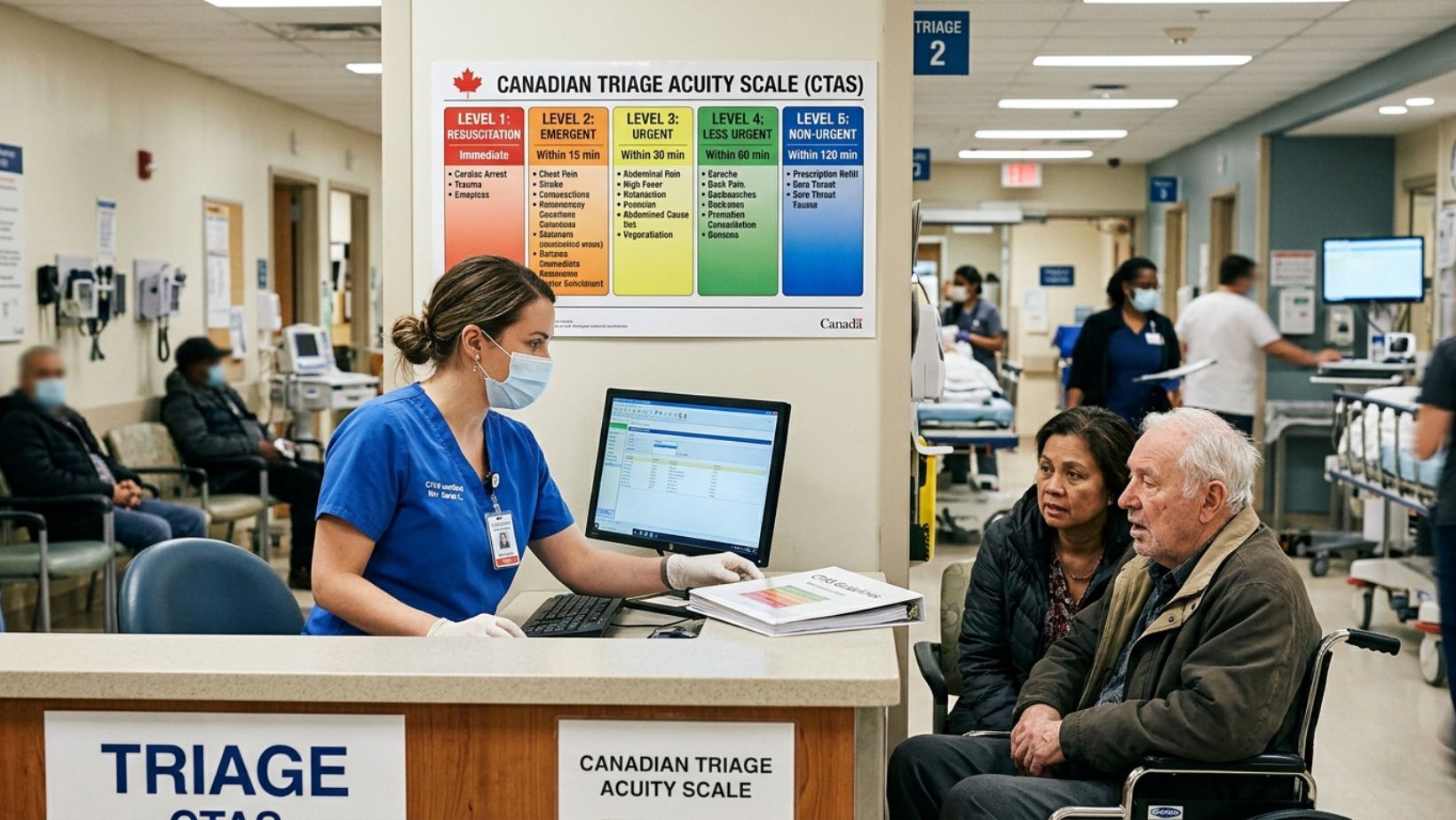
Level 1: Resuscitation is reserved for patients whose conditions are immediately life-threatening and require resuscitation. Cardiac arrest, respiratory failure, and major trauma with hemodynamic instability are examples of presentations that would receive a Level 1 designation. These patients are seen immediately upon arrival and remain the absolute clinical priority for the entire team. The Canadian Triage Acuity Scale guidelines indicate that a Level 1 patient should receive physician assessment within zero minutes of triage.
Level 2: Emergent applies to patients who are in a high-risk state, have the potential for rapid deterioration, and require urgent assessment and intervention. Chest pain with suspected cardiac origin, severe respiratory distress, altered level of consciousness, and major fractures are examples. The target physician assessment time for a Level 2 patient under the Canadian Triage Acuity Scale is fifteen minutes from triage.
Level 3: Urgent covers patients with conditions that are not immediately life-threatening but could progress to serious if assessment and treatment are delayed. Moderate respiratory distress, significant abdominal pain, moderate trauma, and mental health presentations with some risk of harm fall in this category. The target time for physician assessment is thirty minutes.
Level 4: Less Urgent applies to patients whose conditions relate to patient age, distress, or the potential for deterioration but who are not considered to be at immediate risk. Minor lacerations, mild musculoskeletal injuries, and urinary tract infections in otherwise well adults are typical examples. The target physician assessment time is sixty minutes.
Level 5: Non-Urgent covers presentations that are chronic, minor, or may be part of a broader problem but for which there is low potential for deterioration. These patients may also be appropriate candidates for alternative care settings rather than an emergency department. Target assessment time is up to two hours under the Canadian Triage Acuity Scale framework.
One thing that is important to understand is that the Canadian Triage Acuity Scale level assigned at initial triage is not permanent. If your condition changes while you are waiting, a reassessment can result in a change in your triage level, and the frequency of reassessment is built into the framework based on your initial designation.
Who Performs Triage and How the Canadian Triage Acuity Scale Is Applied
This is a question that comes up often, and the answer has implications not only for patient experience but for the broader discussion around healthcare workforce challenges in emergency care settings.
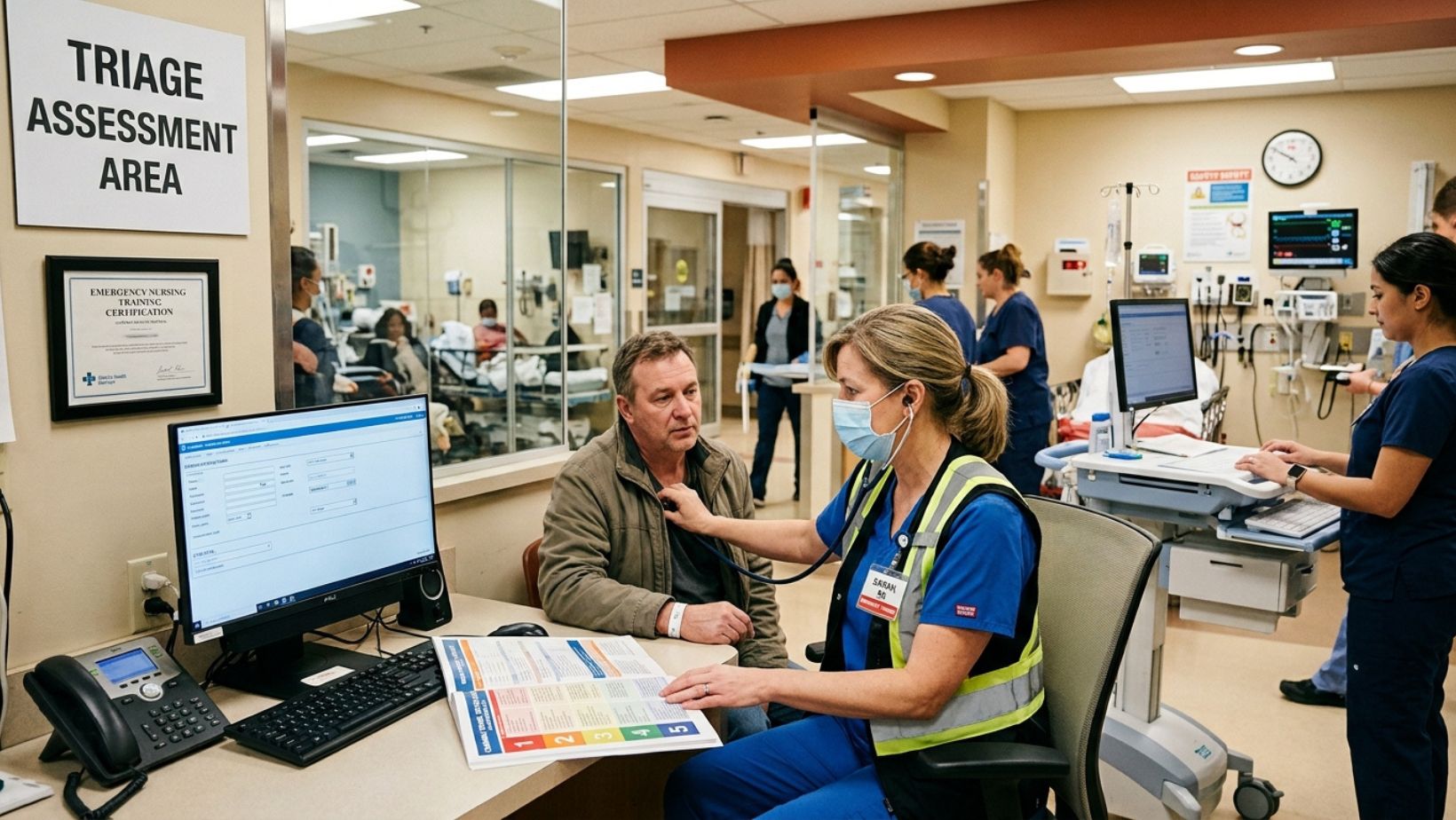
In the vast majority of Canadian emergency departments, triage assessments using the Canadian Triage Acuity Scale are performed by registered nurses with specific emergency nursing training. The triage nurse is often the first clinical professional a patient encounters upon arrival, and the quality of that initial assessment has a direct bearing on patient safety and departmental efficiency. A triage nurse who accurately identifies a high-acuity patient and assigns an appropriate CTAS level ensures that the right resources are mobilized quickly. A triage assessment that underestimates acuity can result in delayed care for a patient who needed urgent intervention from the moment they walked through the door.
This reliance on nursing expertise in triage is one reason why healthcare workforce challenges in emergency nursing have direct patient safety consequences. When emergency departments are understaffed at the triage position, either because of nursing shortages or because experienced emergency nurses have left the profession due to burnout, the triage function either slows down or is performed by staff with less experience in emergency acuity assessment. Both outcomes carry real risk.
Why the Canadian Triage Acuity Scale Matters Beyond Individual Patient Care
You might be thinking about the Canadian Triage Acuity Scale primarily as a clinical tool, and it absolutely is. But it is also one of the most important data collection instruments in Canadian emergency medicine, and its value extends well beyond the decisions made at the triage desk.
CTAS level data collected across emergency departments is aggregated and analyzed to measure system performance, benchmark wait times against national targets, identify departments or time periods where the gap between recommended and actual assessment times is widest, and support policy decisions about emergency department funding, staffing ratios, and capacity planning. The Canadian Institute for Health Information uses Canadian Triage Acuity Scale data as a core component of its emergency department reporting, making it possible to compare performance across institutions and provinces in a meaningful, standardized way.
For hospital administrators and health system leaders, this means that the Canadian Triage Acuity Scale is not only a clinical framework but a strategic accountability tool. Departments that are consistently unable to meet CTAS target assessment times for Level 2 and Level 3 patients are surfacing a signal that something systemic needs attention, whether that is physical capacity, staffing levels, patient flow processes, or demand management upstream.
How a Medical Consultant Can Support Emergency Department Performance
Emergency departments navigating the pressure of high volumes, workforce shortages, and performance accountability often benefit from working with a medical consultant who understands both the clinical dynamics of emergency care and the operational levers available to improve performance. A medical consultant can help assess where CTAS-related wait time targets are being missed, identify root causes in staffing, flow, or triage processes, and develop targeted recommendations grounded in clinical evidence and operational reality.
Healthcare Consulting and Emergency System Design
Healthcare consulting in emergency medicine has become an increasingly important resource for health systems trying to improve emergency department performance without simply adding resources that may not be available. A healthcare consultant with emergency medicine and health system experience can advise on triage workflow redesign, care team models that optimize the skills of different professional groups, and patient flow strategies that reduce the downstream crowding that undermines even well-executed triage processes.
For current national data on emergency department performance, including wait times by CTAS level, patient volumes, and benchmarks across provinces, the Canadian Institute for Health Information provides the most comprehensive publicly available dataset and is the standard reference for health system planning in this space.
Medical Consultant Networks and Emergency Medicine Expertise
A medical consultant network that includes emergency physicians, emergency nurses, and health system operations experts can provide healthcare organizations with the clinical depth and operational breadth needed to address complex emergency department challenges. Whether an organization is redesigning its triage process, responding to performance concerns, or preparing for a surge in patient volumes, access to a network of experienced clinical consultants provides faster, more credible guidance than most organizations can generate internally.
Final Thoughts
The Canadian Triage Acuity Scale is more than a classification system. It is the backbone of equitable, safe, and evidence-based emergency care across Canada. It ensures that a patient arriving in cardiac arrest is seen immediately whether they are in a major urban teaching hospital or a small community emergency department. It provides a shared language for emergency clinicians, administrators, and health systems to communicate about patient acuity, departmental performance, and system capacity. And it generates the data that makes accountability for emergency care performance possible at a national level.
Understanding the Canadian Triage Acuity Scale helps you ask better questions about the care you or your patients receive, make more informed decisions about emergency department operations, and engage more productively in the system-level conversations about how emergency care in Canada needs to evolve.
If you are looking to connect with experienced medical consultants or explore physician-led consulting support for emergency care and healthcare operations, MDconsultants offers a trusted network of medical professionals ready to help.

