Social media has transformed the way healthcare professionals communicate, learn, and engage with the public. Whether you’re sharing health education, promoting advocacy initiatives, building your professional brand, or connecting with colleagues, Social Media for Healthcare Professionals offers opportunities that did not exist a decade ago.
However, with those opportunities come responsibilities. A single post can reach thousands of people within minutes, making it essential to understand both the benefits and risks of online engagement. Many physicians and healthcare providers are now using platforms such as X (formerly Twitter), Instagram, Threads, Facebook, LinkedIn, and TikTok to share knowledge and participate in healthcare conversations.
If you’re considering expanding your online presence, understanding how to approach Social Media for Healthcare Professionals strategically can help you maximize the benefits while avoiding common pitfalls.
Key Takeaways
- Social Media for Healthcare Professionals can support education, networking, and professional growth.
- Maintaining professional boundaries is essential.
- Patient privacy should always remain a top priority.
- Healthcare professionals should be aware of legal and regulatory considerations.
- Clear communication reduces misunderstandings online.
- Thoughtful engagement helps build credibility and trust.
Why Healthcare Professionals Are Using Social Media

The growing popularity of Social Media for Healthcare Professionals is driven by several factors. Healthcare providers now have the ability to share accurate medical information directly with the public, helping combat misinformation while educating patients and communities.
In addition, many professionals use Social Media for Healthcare Professionals to stay informed about industry developments, research findings, and healthcare trends.
For some physicians, social media also provides opportunities to establish thought leadership, share professional achievements, and contribute to important healthcare discussions.
Social Media for Professional Networking

One of the greatest advantages of Social Media for Healthcare Professionals is the ability to connect with peers around the world.
Unlike traditional networking events, social media allows healthcare providers to engage with specialists, researchers, educators, and healthcare leaders on a daily basis. Through meaningful participation, professionals can expand their networks, discover career opportunities, and learn from experts across multiple disciplines.
Many physicians find that Social Media for Healthcare Professionals creates valuable opportunities to exchange ideas, discuss emerging healthcare challenges, and collaborate on projects.
A strong professional network can also lead to speaking engagements, research partnerships, mentorship opportunities, and consulting projects.
Strategy 1: Define Professional and Personal Boundaries
One of the most important principles of Social Media for Healthcare Professionals is keeping personal and professional activities separate.
If you use social media for both personal and professional purposes, consider maintaining separate accounts. This helps preserve professional boundaries and reduces the risk of inappropriate content affecting your professional reputation.
Patients, colleagues, employers, and regulatory bodies may all view your online presence differently than personal friends or family members.
Strategy 2: Follow Regulatory Guidelines
Healthcare professionals should always review guidance provided by their regulatory colleges and professional organizations.
Most guidelines emphasize professionalism, patient confidentiality, and appropriate online conduct. Following these recommendations can help ensure your use of Social Media for Healthcare Professionals remains ethical and compliant.
Strategy 3: Develop a Social Media Policy
Before actively engaging online, consider establishing a social media policy for your practice or organization.
A clear policy helps ensure consistency among staff members and establishes expectations regarding appropriate content, privacy protection, and communication standards.
Organizations involved in healthcare consulting often encourage healthcare teams to create formal policies before expanding their online presence.
Strategy 4: Understand the Reach of Social Media
One reality of Social Media for Healthcare Professionals is that content can spread far beyond your intended audience.
Even posts shared with a small group may eventually become public. Because of this, every post should be approached with professionalism and careful consideration.
Remember that online content may remain accessible long after it is published.
Strategy 5: Keep Messages Clear and Simple
Healthcare topics can be complex, but social media often rewards concise communication.
When using Social Media for Healthcare Professionals, focus on clear, accessible language that reduces the risk of misunderstandings. If a topic requires significant explanation, consider linking to additional resources or using longer-form content.
Clear communication helps build trust while improving audience engagement.
Writing Publishing and Social Media for Healthcare Professionals
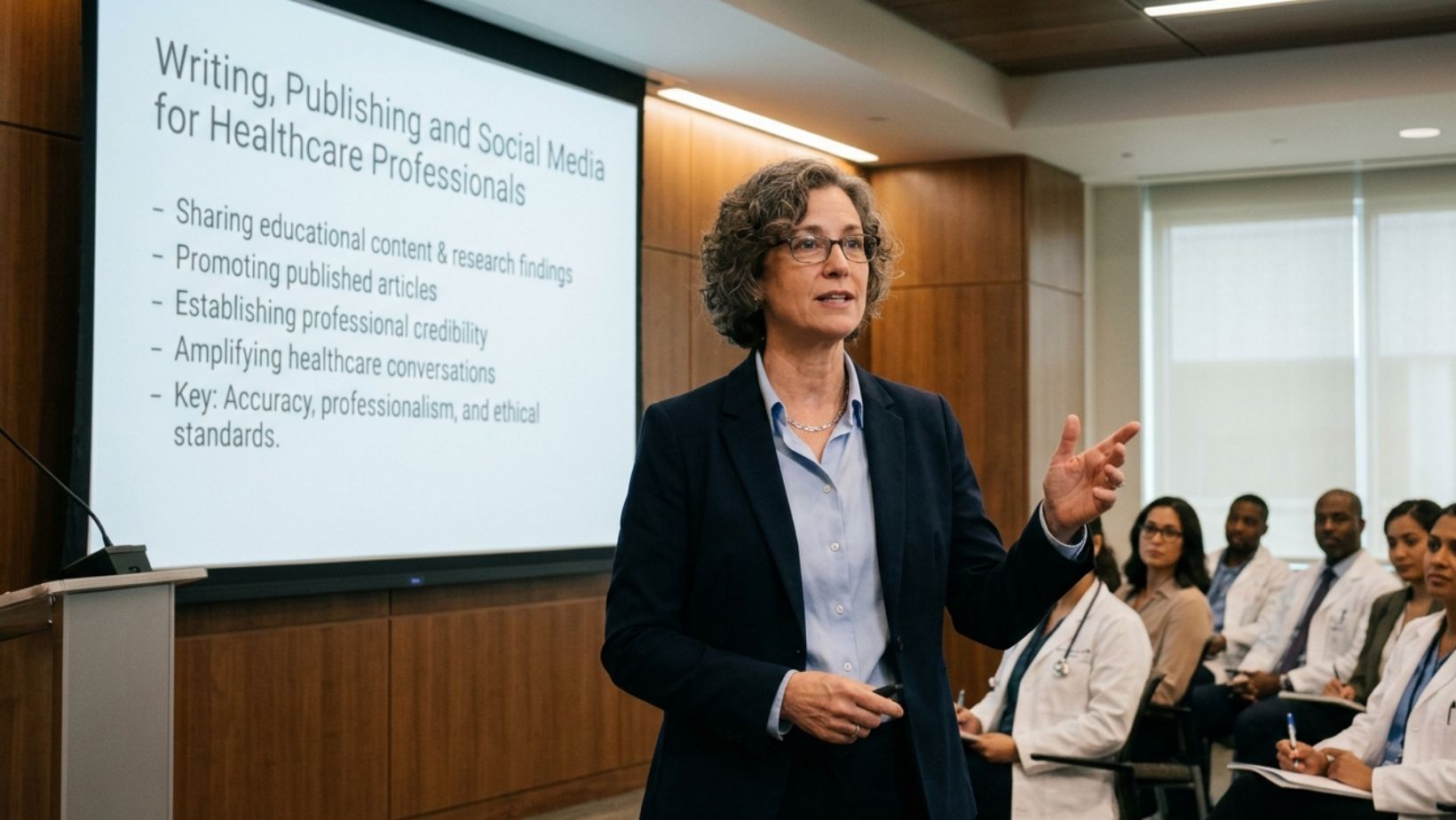
Many healthcare providers use Social Media for Healthcare Professionals as a platform for sharing educational content, publishing insights, and participating in healthcare discussions.
Whether you’re posting short educational updates, promoting published articles, or sharing research findings, social media can amplify your professional voice and reach larger audiences.
A medical consultant who regularly publishes evidence-based content can establish credibility while contributing valuable information to healthcare conversations.
The key is ensuring that published content remains accurate, professional, and aligned with ethical standards.
Strategy 6: Adapt Communication for Online Audiences
The same communication principles used with patients should also apply online.
Healthcare professionals should avoid providing personalized medical advice that could unintentionally establish a physician-patient relationship through social media interactions.
This is particularly important when using Social Media for Healthcare Professionals to answer questions from the public.
Strategy 7: Engage Respectfully
Disagreements are common on social media.
Whether discussing healthcare policy, research findings, or public health issues, maintaining professionalism is essential. A healthcare consultant often understands the importance of objective communication when engaging with diverse audiences.
Sometimes the most professional response is choosing not to engage in a heated discussion.
Strategy 8: Protect Patient Privacy
Patient confidentiality remains one of the most important responsibilities associated with Social Media for Healthcare Professionals.
Never share identifiable patient information, photographs, or case details without proper authorization. Even in physician-only groups, caution is necessary to protect privacy and maintain trust.
A commitment to privacy helps strengthen professional credibility and reduces legal risk.
Strategy 9: Understand Legal Risks
Healthcare professionals should be aware of potential legal concerns related to online activity.
Defamation, copyright infringement, and privacy violations can all create challenges. Many organizations that utilize a medical consultant network emphasize legal awareness when advising professionals on social media engagement.
Understanding these risks helps healthcare providers make informed decisions before publishing content.
Strategy 10: Practice Mindful Engagement
The most successful users of Social Media for Healthcare Professionals approach online engagement thoughtfully.
Use social media to celebrate professional achievements, advocate for healthcare improvements, educate communities, and support meaningful conversations.
Rather than posting impulsively, take time to evaluate how content may be interpreted by different audiences.
Thoughtful participation often produces stronger long-term results.
Common Pitfalls to Avoid
Despite its advantages, Social Media for Healthcare Professionals can create challenges when used carelessly.
Common mistakes include:
- Blurring personal and professional boundaries
- Sharing inaccurate information
- Violating patient privacy
- Engaging emotionally in public debates
- Posting without understanding regulatory expectations
- Ignoring long-term reputational consequences
Avoiding these pitfalls can help healthcare professionals build positive and sustainable online presences.
Fact vs. Reality: What Healthcare Professionals Often Worry About
Many healthcare providers worry that social media is too risky to use professionally.
The reality is that Social Media for Healthcare Professionals can be highly beneficial when approached strategically and responsibly. The goal is not to avoid social media entirely but to use it thoughtfully while maintaining professional standards.
With proper planning, healthcare providers can leverage social media to educate, connect, and advocate without compromising professionalism.
Conclusion
When used responsibly, Social Media for Healthcare Professionals can be a powerful tool for education, networking, advocacy, and career development. From building professional relationships to sharing valuable healthcare information, social media offers opportunities that can enhance both personal and professional growth.
The key is balancing visibility with responsibility. By protecting patient privacy, maintaining professional boundaries, communicating clearly, and engaging respectfully, healthcare professionals can maximize the benefits while minimizing potential risks.
If you’re looking to expand your professional network, connect with healthcare leaders, or explore physician opportunities, MDconsultants provides resources and connections that help healthcare professionals grow their careers and make meaningful contributions to the healthcare community