Finding the right internal medicine specialist in Toronto can feel overwhelming, especially when you are managing a chronic condition, recovering from a complex illness, or simply trying to understand which type of doctor is best suited to your health needs. Internal medicine is one of the most comprehensive fields in modern healthcare, and understanding its scope can help patients make informed decisions about their care.
This guide explains what internal medicine is, what an internal medicine specialist does, and how working with a qualified medical consultant can improve health outcomes for patients across Toronto.
What Is Internal Medicine

Internal medicine is a medical specialty focused on the prevention, diagnosis, and treatment of diseases affecting adults. Physicians trained in this field, often called internists, are equipped to manage a wide range of conditions, from routine chronic disease management to complex, multi-system illnesses. Unlike specialists who focus on a single organ or body system, internal medicine doctors are trained to look at the whole patient, considering how different conditions and treatments interact with one another.
In Canada, physicians who specialize in internal medicine complete medical school followed by several years of residency training, after which many pursue certification through the Royal College of Physicians and Surgeons of Canada (FRCPC). This rigorous training prepares them to handle both straightforward and highly complex cases, making them a central figure in adult healthcare.
What Is General Internal Medicine
General internal medicine refers to the broad practice of internal medicine without further subspecialization into areas such as cardiology, gastroenterology, or nephrology. A general internal medicine physician manages overall adult health, coordinates care between specialists, and often serves as the primary point of contact for patients with complicated or overlapping medical issues.
General internal medicine physicians frequently work in hospital settings, where they oversee the care of admitted patients, but many also practice in outpatient clinics or consultative roles. Their training allows them to evaluate undiagnosed symptoms, manage multiple chronic conditions simultaneously, and determine when a referral to a subspecialist is necessary. In Toronto, general internal medicine physicians play an important role in both community hospitals and academic teaching centres, given the city’s dense and diverse patient population.
What Procedures Do Internal Medicine Doctors Do
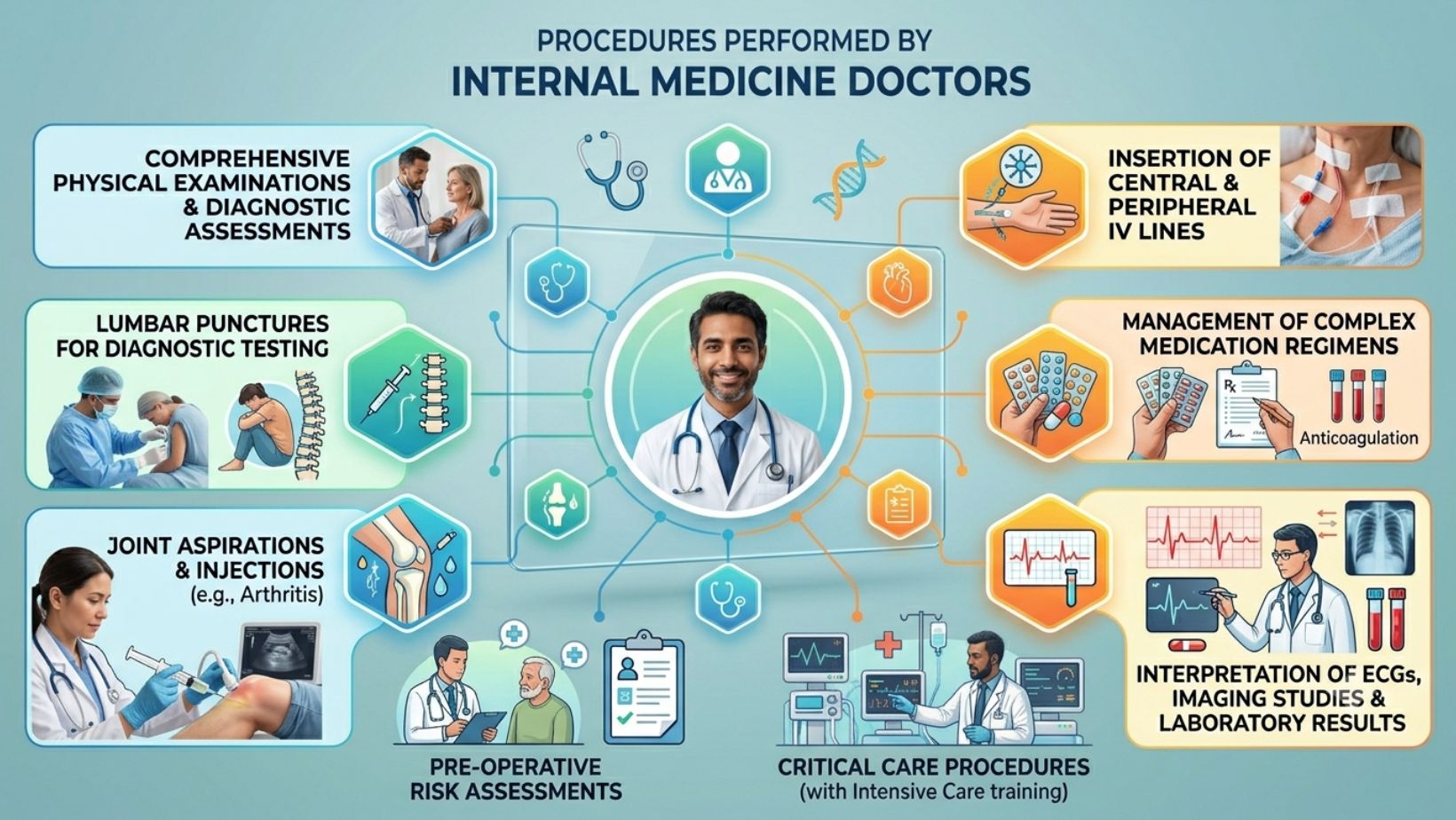
While internal medicine is largely a cognitive and consultative specialty, many internists perform or oversee a range of procedures as part of patient care. The exact scope depends on the physician’s training, subspecialty, and practice setting, but common procedures and clinical activities include:
- Comprehensive physical examinations and diagnostic assessments
- Lumbar punctures for diagnostic testing
- Joint aspirations and injections for conditions such as arthritis
- Insertion of central and peripheral intravenous lines
- Management of complex medication regimens, including anticoagulation therapy
- Interpretation of electrocardiograms, imaging studies, and laboratory results
- Pre-operative risk assessments for patients undergoing surgery
- Critical care procedures for internists with additional training in intensive care medicine
It is worth noting that an internal medicine specialist working in a hospital setting, particularly in critical care or emergency-adjacent roles, may be trained in additional procedures such as airway management, central line insertion, and advanced life support techniques. This breadth of capability is one reason internal medicine specialists are often relied upon during medically complex or unstable presentations.
The Role of a Dr for Internal Medicine in Patient Care
A dr for internal medicine typically becomes involved when a patient’s condition is too complex for a single-system specialist or when multiple health issues need to be managed together. For example, a patient with diabetes, hypertension, and kidney disease may benefit more from the coordinated oversight of an internal medicine physician than from separate, uncoordinated specialist visits.
In hospital settings, internal medicine physicians are often the ones who admit patients, order and interpret diagnostic tests, and develop treatment plans that account for every aspect of a patient’s health. Their training emphasizes diagnostic reasoning, which is particularly valuable for patients presenting with unclear or overlapping symptoms.
Principles of Internal Medicine
The principles of internal medicine centre on evidence-based, patient-centred care that addresses the whole person rather than isolated symptoms. Internists are trained to integrate findings from multiple organ systems, prioritize accurate diagnosis before treatment, and continuously reassess management plans as new information becomes available. This foundation supports safer, more coordinated care, especially for patients with chronic or multiple coexisting conditions.
Why Toronto Patients Benefit From Specialized Internal Medicine Care
Toronto is home to a large and medically diverse population, with many residents managing multiple chronic conditions or requiring coordinated care across several specialties. An internal medicine specialist based in Toronto is often positioned within, or connected to, major teaching hospitals, giving patients access to advanced diagnostic tools and a broader referral network when subspecialist input is required.
Because Toronto’s healthcare system includes both community and academic hospitals, patients have access to internal medicine physicians with varying areas of focus, from general internal medicine to subspecialties such as cardiology, critical care, and infectious disease. This range allows patients to be matched with a physician whose expertise aligns closely with their specific health concerns.
The Growing Role of Medical Consultants in Healthcare
Beyond direct patient care, many internal medicine physicians also contribute to the healthcare system as a medical consultant or healthcare consultant. This role involves advising hospitals, healthcare organizations, and businesses on clinical operations, patient safety protocols, emergency preparedness, and healthcare system design.
Healthcare consulting has become an increasingly important field as health systems face pressure to improve efficiency, manage costs, and respond to emerging public health challenges. Physicians who move into consulting roles bring frontline clinical experience to discussions that might otherwise be driven purely by administrative or financial considerations. This blend of clinical and operational expertise often results in more practical, patient-centred recommendations for organizations navigating complex healthcare decisions.
A physician acting as a healthcare consultant may be involved in tasks such as reviewing clinical protocols, advising on staffing and resource allocation, supporting healthcare technology implementation, or helping organizations prepare for emergencies and operational disruptions. In Toronto specifically, the presence of major hospital networks and a growing health technology sector has created demand for physicians who can bridge clinical practice with strategic advisory work.
Medical Consultant Networks and Their Value
A medical consultant network connects healthcare organizations with physicians who have both clinical expertise and consulting experience. These networks allow hospitals, startups, and healthcare businesses to access specialized medical insight without needing to employ a full-time physician advisor.
For patients, the existence of these networks is significant because the same physicians providing consulting services often remain active in clinical practice. This means patients searching for an internal medicine specialist in Toronto may find that their physician also contributes to broader healthcare improvement efforts, bringing a more system-aware perspective to individual patient care.
One example of this dual role can be seen in physicians affiliated with organizations such as MDconsultants, where physicians trained in internal medicine, critical care, and emergency medicine combine clinical practice with consulting work for healthcare organizations. Profiles like this illustrate how a single physician’s training and experience can extend beyond direct patient care into broader healthcare system support, including emergency preparedness planning, operational strategy, and physician-led advisory services.
How to Choose the Right Internal Medicine Specialist in Toronto
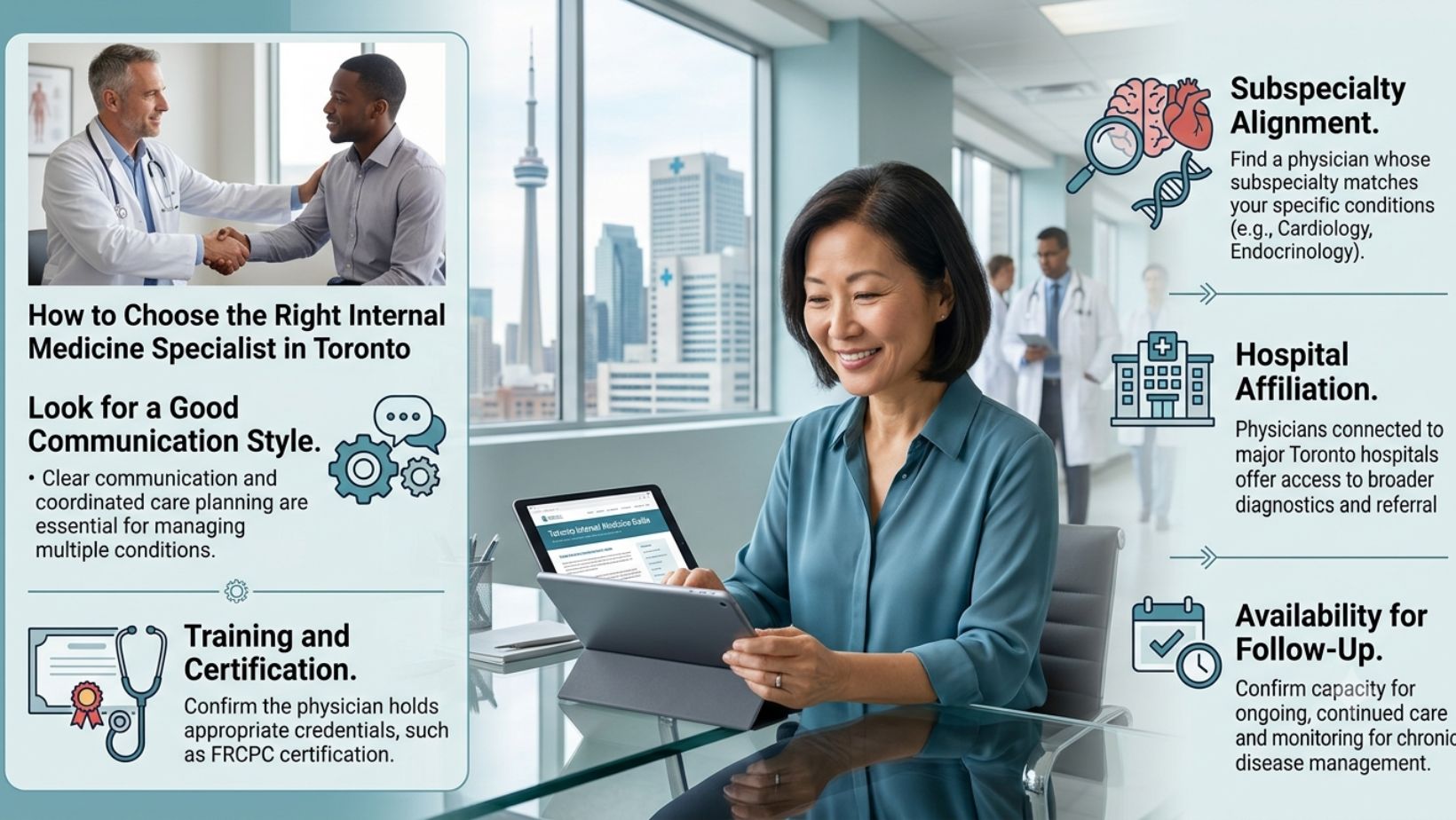
When searching for an internal medicine specialist, patients should consider several factors:
- Training and certification. Confirm the physician holds appropriate credentials, such as FRCPC certification in internal medicine.
- Subspecialty alignment. If you have a specific condition, look for a physician whose subspecialty training matches your needs.
- Hospital affiliation. Physicians connected to major Toronto hospitals often have access to broader diagnostic resources and specialist referral networks.
- Communication style. Since internal medicine often involves managing multiple conditions, clear communication and coordinated care planning are essential.
- Availability for follow-up. Chronic disease management requires ongoing monitoring, so confirm the physician’s capacity for continued care.
Conclusion
Internal medicine remains one of the most versatile and essential specialties in adult healthcare, particularly in a city as medically complex as Toronto. Whether a patient requires the broad oversight of general internal medicine or the focused expertise of a subspecialist, working with a qualified internal medicine specialist can lead to more accurate diagnoses, better-coordinated treatment, and improved long-term health outcomes.
At the same time, the growing involvement of physicians in healthcare consulting and medical consultant network roles reflects a broader shift toward integrating clinical expertise into healthcare system design. Patients in Toronto benefit from this trend, as many internal medicine physicians now bring both direct patient care experience and systems-level insight to the table, ultimately strengthening the quality and coordination of care available across the city.
If you are looking to connect with experienced internal medicine specialists or explore physician-led healthcare consulting support in Toronto, MDconsultants offers a trusted network of medical professionals ready to help.