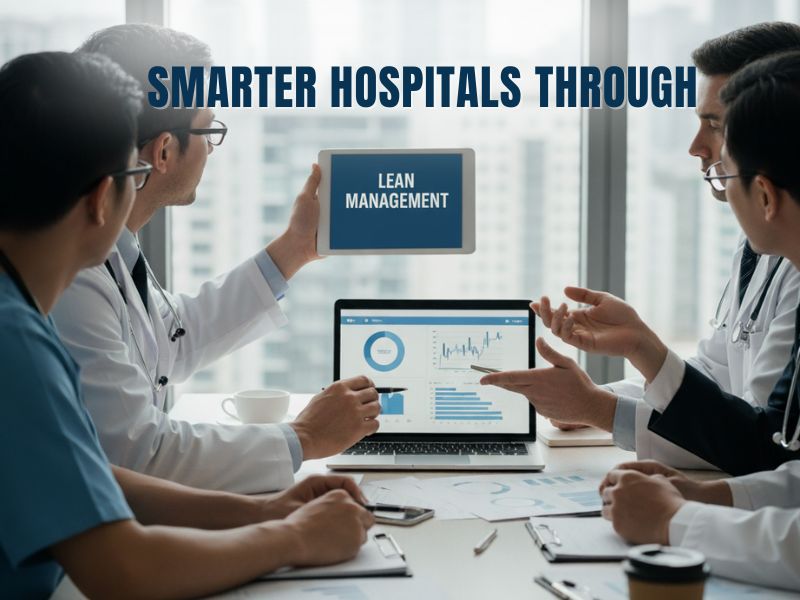
In the fast-paced world of healthcare, hospitals constantly face the challenge of doing more with less. Every day, healthcare professionals strive to provide the highest quality care to patients while working within limited budgets, staff shortages, and growing administrative demands. To meet these challenges, many hospitals are turning to Lean Management — a strategy that focuses on improving efficiency, eliminating waste, and optimizing every process to add value for patients.
Lean Management is not just a buzzword in healthcare. It is a structured, proven approach that helps hospitals operate smarter and deliver better outcomes for both patients and staff. At the heart of this transformation is the principle of continuous improvement, where every team member is encouraged to find better ways to serve patients and enhance daily operations.
Understanding Lean Management in Healthcare
Lean Management was first developed by Toyota to improve manufacturing processes. Over time, its principles have been successfully adapted to healthcare settings. The goal of Lean is simple — to identify and remove any activity that does not add value to the patient’s care. This could be unnecessary paperwork, delays in communication, or repetitive administrative tasks that take time away from patient care.
In hospitals, value is defined from the patient’s perspective. Every process, from admission to discharge, should contribute to patient well-being and satisfaction. Anything that does not support this goal is considered waste.

Common examples of waste in hospitals include:
- Long waiting times for patients
- Repeated diagnostic tests due to miscommunication
- Inefficient scheduling that leads to overtime or underused staff
- Excess inventory of medical supplies that expire before use
By addressing these inefficiencies, hospitals can deliver care that is faster, safer, and more cost-effective.
The Core Principles of Lean Management
The success of Lean Management lies in its five key principles. When applied effectively, these principles can transform how hospitals operate and improve overall hospital efficiency.
- Define Value
The first step is to understand what patients truly value. In healthcare, value often means timely care, safety, respect, and clear communication. Hospitals need to align their processes with what matters most to patients. - Map the Value Stream
Hospitals must analyze every step in their care delivery process to identify which actions add value and which do not. This “value stream mapping” helps visualize inefficiencies and find opportunities for improvement. - Create Flow
Once wasteful steps are removed, hospitals can redesign workflows to ensure that care moves smoothly from one stage to another. A smooth flow reduces waiting times and helps staff work more efficiently. - Establish Pull
Instead of pushing patients through a system that may not be ready for them, Lean Management emphasizes responding to patient needs as they arise. This means providing the right care at the right time. - Pursue Perfection
Lean is not a one-time project but an ongoing journey. Continuous improvement ensures that hospitals regularly review their processes, listen to feedback, and make adjustments to achieve better outcomes.
How Lean Management Improves Hospital Efficiency
Implementing Lean principles in a hospital can bring measurable improvements in both patient care and operational performance. Here are some key ways it makes a difference.
1. Reducing Patient Wait Times
One of the most visible impacts of Lean is the reduction of patient waiting times. Hospitals can streamline scheduling systems, improve triage processes, and better coordinate between departments. This ensures patients receive timely care without unnecessary delays.

2. Enhancing Staff Productivity
When workflows are simplified, staff can spend more time caring for patients rather than dealing with administrative burdens. Lean Management eliminates redundancy, improves communication, and boosts morale by empowering healthcare workers to make decisions that enhance efficiency.
3. Improving Quality of Care
Lean emphasizes standardizing best practices across departments. This reduces variation in treatment, minimizes medical errors, and ensures consistent, high-quality care. The result is safer care and better patient outcomes.
4. Reducing Operational Costs
By eliminating waste and optimizing resources, hospitals can significantly reduce costs without compromising patient care. Better inventory management, efficient use of equipment, and improved scheduling lead to savings that can be reinvested in patient services.
5. Enhancing Collaboration Across Departments
Lean promotes teamwork and transparency. When departments work together toward common goals, it creates a stronger culture of accountability and trust. Communication improves, and decision-making becomes faster and more informed.
Real-World Examples of Lean in Hospitals
Many hospitals around the world have embraced Lean Management to great success. For example, hospitals have redesigned emergency department processes to reduce wait times by several hours. Others have reorganized their operating room schedules to perform more surgeries with the same resources. Some facilities have used Lean methods to improve medication administration accuracy and enhance patient safety.
These success stories prove that Lean is not just about cutting costs — it is about creating systems that work better for both patients and healthcare providers.
Challenges in Implementing Lean Management
While Lean offers many benefits, implementing it in healthcare can be complex. Hospitals often face resistance to change, especially from staff who are already overworked. It takes strong leadership and clear communication to show how Lean principles can make their daily work easier and more meaningful.
Data collection and analysis are also essential. Hospitals must use accurate metrics to measure performance and track progress. Without proper data, it becomes difficult to identify areas of waste or prove the effectiveness of changes.
This is why professional healthcare consulting plays a crucial role in Lean implementation. Experts with real clinical experience can guide hospitals through this transition, ensuring that Lean principles are applied effectively and sustainably.
The Role of MD Consultants in Lean Transformation
At MDconsultants, a team of physician-led healthcare consultants understands the unique challenges hospitals face. With expertise across clinical operations, research, and healthcare management, MDconsultants helps organizations implement Lean strategies that drive measurable results.
Their consulting process is designed to help hospitals:
- Identify inefficiencies in patient flow and administrative processes
- Design data-driven solutions that enhance hospital efficiency
- Train medical staff and leadership teams in Lean principles
- Establish a culture of continuous improvement across departments
- Measure success through performance metrics and patient feedback
What sets MDconsultants apart is their physician-led approach. Because the team includes practicing doctors and healthcare professionals, they bring firsthand knowledge of hospital dynamics. This ensures that every Lean recommendation is practical, patient-centered, and aligned with clinical realities.

Through customized consulting solutions, MDconsultants empowers hospitals to not only operate efficiently but also to provide a better care experience for patients. Their expertise bridges the gap between management strategies and real-world healthcare delivery.
Why Lean Management is the Future of Hospital Operations
The healthcare landscape continues to evolve, with increasing demand for high-quality care and accountability. Lean Management is becoming essential for hospitals that want to remain competitive and sustainable. It provides a structured way to adapt to change, optimize resources, and maintain a strong focus on patient needs.
Hospitals that embrace Lean principles today will be better equipped for the challenges of tomorrow. They will have more resilient systems, empowered staff, and satisfied patients — the true measure of hospital success.
Conclusion
Lean Management is more than a strategy. It is a mindset that encourages hospitals to continuously improve and deliver the best possible care. By reducing waste, streamlining processes, and empowering teams, hospitals can achieve higher efficiency and better patient outcomes.
However, achieving these results requires guidance, expertise, and real-world insight. This is where MDconsultants play an important role. With physician-led consulting and a deep understanding of healthcare operations, they help hospitals implement Lean practices that truly work.
If your hospital is ready to take the next step toward excellence, visit mdconsultants.ca to learn how their healthcare consulting services can help you build a more efficient, patient-focused, and future-ready organization.
Related Reading: Transforming Healthcare Startups with Expert Medical Consulting