
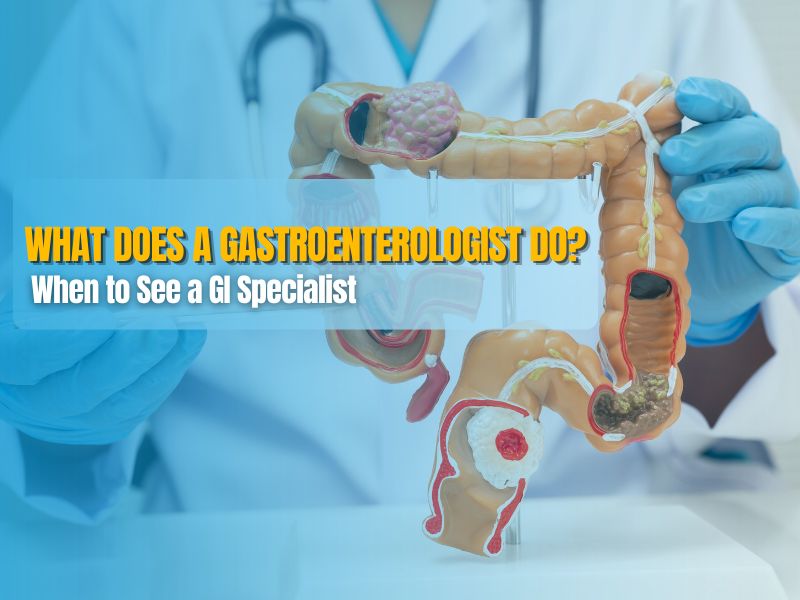
What does a gastroenterologist do? A gastroenterologist is a physician who specializes in diagnosing and treating conditions affecting the digestive system, including the esophagus, stomach, small intestine, large intestine, rectum, liver, gallbladder, and pancreas. A gastroenterologist evaluates symptoms such as persistent abdominal pain, chronic heartburn, unexplained changes in bowel habits, rectal bleeding, and difficulty swallowing, and uses a combination of clinical assessment, laboratory testing, and endoscopic procedures to identify and manage the underlying cause.
If you have ever wondered whether your digestive symptoms deserve more attention than a quick conversation with your family doctor, you are not alone. Patients preparing for a referral often carry a list of questions they are not sure how to ask. Among the most commonly searched are: What conditions does a gastroenterologist treat? When should I see a gastroenterologist instead of my family doctor? Does a gastroenterologist perform surgery? How do I prepare for an endoscopy? This guide answers those questions directly, so you can walk into your next appointment informed and confident.
What Is an Gastroenterology
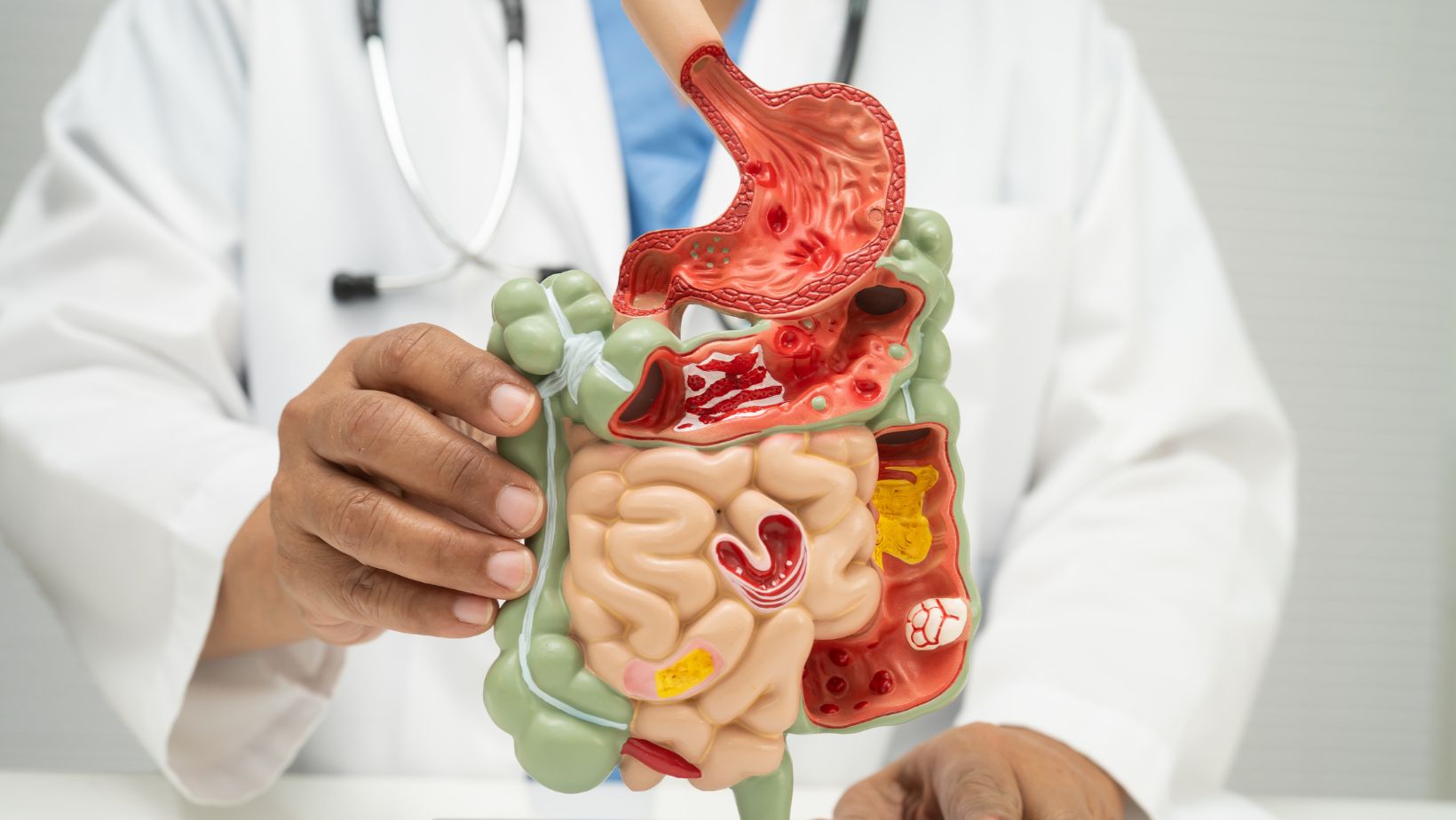
Have you ever stopped to wonder what the word gastroenterology actually means? It comes from three Greek roots: gastro (stomach), enteron (intestine), and logos (the study of). Put them together and you get a specialty dedicated to understanding and treating the entire digestive system, from the esophagus all the way to the rectum, along with the liver, pancreas, and biliary system.
What makes gastroenterology particularly interesting as a medical discipline is that it blends deep diagnostic thinking with hands-on procedural skills. A gastroenterologist is trained first as an internist, completing a residency in internal medicine before spending an additional two to three years in a gastroenterology fellowship. That means when you see a gastroenterologist, you are sitting across from a physician who has spent a significant portion of their career learning to think carefully about complex digestive problems and then act on those insights through clinical procedures.
In Canada, the Royal College of Physicians and Surgeons of Canada oversees training and certification in gastroenterology as a subspecialty of internal medicine. The depth of that training is precisely why a gastroenterologist is equipped to manage everything from a common condition like acid reflux to a complex diagnosis like Crohn’s disease or liver cirrhosis.
What Does a Gastroenterologist Actually Treat
Here is something that might surprise you: the scope of what a gastroenterologist treats is far broader than most patients expect. Many people assume GI specialists only deal with stomach pain or colonoscopies, but the reality is considerably more wide-ranging.
Gastroesophageal reflux disease is one of the most common reasons patients are referred to a gastroenterologist. If you have experienced persistent heartburn that does not improve with standard medication, that is a signal worth taking seriously. Left unmanaged, chronic reflux can progress to a condition called Barrett’s esophagus, which carries an elevated risk of esophageal cancer. A gastroenterologist can assess the extent of damage through upper endoscopy and develop a more targeted treatment plan than is typically available through primary care alone.
Inflammatory bowel disease, which includes Crohn’s disease and ulcerative colitis, is another major focus area. These are chronic, immune-mediated conditions that cause inflammation along the digestive tract and can profoundly affect quality of life. A gastroenterologist uses endoscopy and biopsy to diagnose and monitor these conditions, and manages treatment with a range of options from traditional anti-inflammatory medications to advanced biologic therapies.
Colorectal cancer screening is perhaps the most impactful preventive service a gastroenterologist provides. Colonoscopy allows direct visualization of the colon and the detection and removal of precancerous polyps before they develop into cancer. It is the kind of procedure that can genuinely change a patient’s long-term health trajectory, which is why timely access to a gastroenterologist for screening matters so much.
Other conditions managed by a gastroenterologist include celiac disease, irritable bowel syndrome, peptic ulcer disease, pancreatitis, gallbladder disease, viral and autoimmune hepatitis, and fatty liver disease. If your digestive health has felt unpredictable or confusing, a gastroenterologist is the physician most equipped to make sense of it.
The Procedures That Set a Gastroenterologist Apart
One of the things that distinguishes a gastroenterologist from many other internal medicine subspecialists is their procedural skill set. You might not realize it, but many of the diagnostic answers a gastroenterologist needs cannot be obtained through a blood test or an imaging scan alone. They require direct visualization of the digestive tract, which is where endoscopy comes in.
Upper endoscopy, also called esophagogastroduodenoscopy, involves passing a flexible camera through the mouth to examine the esophagus, stomach, and upper small intestine. A gastroenterologist uses this procedure to evaluate heartburn, difficulty swallowing, upper abdominal pain, and unexplained nausea, and can take biopsies, treat bleeding vessels, or dilate narrowed sections of the esophagus all during the same appointment.
Colonoscopy allows a gastroenterologist to examine the entire large intestine through a flexible camera passed through the rectum. When polyps are found, they are removed on the spot, avoiding the need for a second procedure. For many patients, this is the procedure they are most curious and perhaps most anxious about. The good news is that with modern sedation practices, most patients report little to no discomfort.
Other tools available to a gastroenterologist include capsule endoscopy, where a patient swallows a tiny camera that photographs the small intestine, endoscopic ultrasound for imaging structures adjacent to the GI tract, and endoscopic retrograde cholangiopancreatography for diagnosing and treating conditions of the bile ducts and pancreas.
When Should You Actually See a Gastroenterologist

This is the question many patients quietly wonder about but hesitate to raise with their family doctor. So let us address it directly: when does a digestive symptom cross the line from something to monitor at home to something that genuinely warrants a specialist?
You should ask your physician for a referral to a gastroenterologist if you experience persistent heartburn that does not respond to standard medication, unexplained rectal bleeding, significant unintentional weight loss, chronic diarrhea lasting more than four weeks, difficulty swallowing, persistently elevated liver enzymes on routine bloodwork, or a family history of colorectal cancer or inflammatory bowel disease. These are not symptoms of second-guessing yourself. A gastroenterologist has the tools and training to find answers efficiently and accurately.
What Expertise Looks Like in This Field
Curious about what a highly experienced gastroenterologist brings to the table beyond technical skill? Consider the profile of physicians like Dr. Samantha Nazareth, MD, a double board-certified gastroenterologist with over a decade of clinical experience. Trained at Brown University and Cornell and Columbia’s NewYork-Presbyterian Hospital programs, Dr. Nazareth holds fellowship training in both gastroenterology and transplant hepatology, giving her specialized expertise in complex liver disorders alongside her broader GI practice.
What makes her profile particularly instructive is how her clinical depth connects to a wider advisory role. In addition to her patient care work, Dr. Nazareth serves as a medical consultant to health technology companies and digital health startups, contributing to clinical due diligence, product development, and care strategy. Her work has been featured in publications such as Forbes, Well+Good, and The New York Times, reflecting a commitment to making GI medicine accessible and understandable to broader audiences. Her full profile is available through MDconsultants, where physicians with this level of combined clinical and strategic expertise connect with organizations and patients seeking informed guidance.
This kind of dual engagement, deep clinical practice paired with consulting and communication work, represents a growing model in gastroenterology and across medicine more broadly.
Healthcare Consulting and the Future of GI Services
As demand for endoscopy and colonoscopy continues to grow across Canada, driven by an aging population and expanding colorectal cancer screening programs, healthcare organizations are under increasing pressure to optimize how GI services are delivered. Healthcare consulting has become an important resource in this context, helping hospitals and health systems reduce wait times, implement quality benchmarks for endoscopy units, and design patient flow models that improve both access and experience.
A healthcare consultant with clinical gastroenterology experience can advise on staffing models, procedure scheduling efficiency, scope reprocessing standards, and the integration of digital tools that support better patient preparation and follow-up. These are not abstract organizational concerns. They directly affect how quickly a patient with a worrying symptom can see a gastroenterologist and receive an answer.
For evidence-based resources on digestive health and colorectal cancer screening in Canada, the Canadian Digestive Health Foundation offers patient education and clinical guidance across a wide range of gastrointestinal conditions.
The Value of a Medical Consultant Network in GI Care
If you are a healthcare organization looking to strengthen your gastroenterology services, or a patient trying to navigate a complex digestive diagnosis, a medical consultant network that includes gastroenterologists and hepatologists can provide flexible, targeted expertise that is not always available through traditional referral pathways alone. These networks connect clinical knowledge with practical decision-making support, helping both individuals and institutions move forward with greater confidence.
Final Thoughts
A gastroenterologist is far more than the physician who performs your colonoscopy. They are highly trained specialists capable of managing the full complexity of digestive and liver disease, combining diagnostic reasoning with procedural skill to address conditions that significantly affect how you feel and how you live.
If you have been curious about your digestive health, questioning whether your symptoms deserve a specialist’s attention, or simply trying to understand what a GI referral actually involves, the answer is almost always worth exploring. The right gastroenterologist can change the course of your care in ways that a general assessment simply cannot.
If you are looking to connect with experienced medical consultants or explore physician-led consulting support in Canada’s healthcare sector, MDconsultants offers a trusted network of medical professionals ready to help.