A bariatric surgeon is a physician, trained first as a general surgeon, who specializes in surgical treatment for severe obesity and the health problems linked to it, such as type 2 diabetes, high blood pressure, and sleep apnea. A bariatric surgeon does not only operate. This doctor decides with you whether surgery is the right step, performs procedures like sleeve gastrectomy and gastric bypass, and stays involved in your recovery and long term health.
If you are searching this question, you may be weighing weight loss surgery for yourself or someone you love, or you may be a physician curious about this specialty. Either way, you are asking the right thing. The most commonly searched follow up questions include: What is the difference between a bariatric surgeon and a regular surgeon? Who qualifies for bariatric surgery? How long does a bariatric surgeon train? Is bariatric surgery worth it? This guide answers each of them in plain language, the way we would explain it if you were sitting across from us.
What the Work Looks Like Day to Day
Think of the job in three stages, because that is how you will experience it.
Before surgery, a bariatric surgeon reviews your medical history, past weight loss attempts, medications, and test results. You will usually meet a team that includes dietitians, psychologists, and nurses, and the bariatric surgeon helps coordinate that team so your plan makes sense as a whole.
During surgery, the bariatric surgeon performs the operation, most often through small incisions with a camera, which is called laparoscopic surgery. Most procedures take place in a hospital and often involve at least one night of inpatient care.
After surgery, your doctor checks your healing, watches for complications, and follows your progress over the years.
The Procedures You May Hear About

Your options depend on your health, your goals, and your history. A sleeve gastrectomy removes a large part of the stomach so you feel full sooner. A gastric bypass creates a small stomach pouch and reroutes part of the small intestine, which changes how much food you can eat and absorb. A duodenal switch is a more complex operation used in selected cases, and revision surgery corrects or converts an earlier procedure that is no longer working as intended. Some people also hear about an endoscopic balloon, which a bariatric surgeon or gastroenterologist may place without a surgical incision. There is no single best operation, and a thoughtful bariatric surgeon will explain why one option fits you better than another.
When Should You See a Bariatric Surgeon?
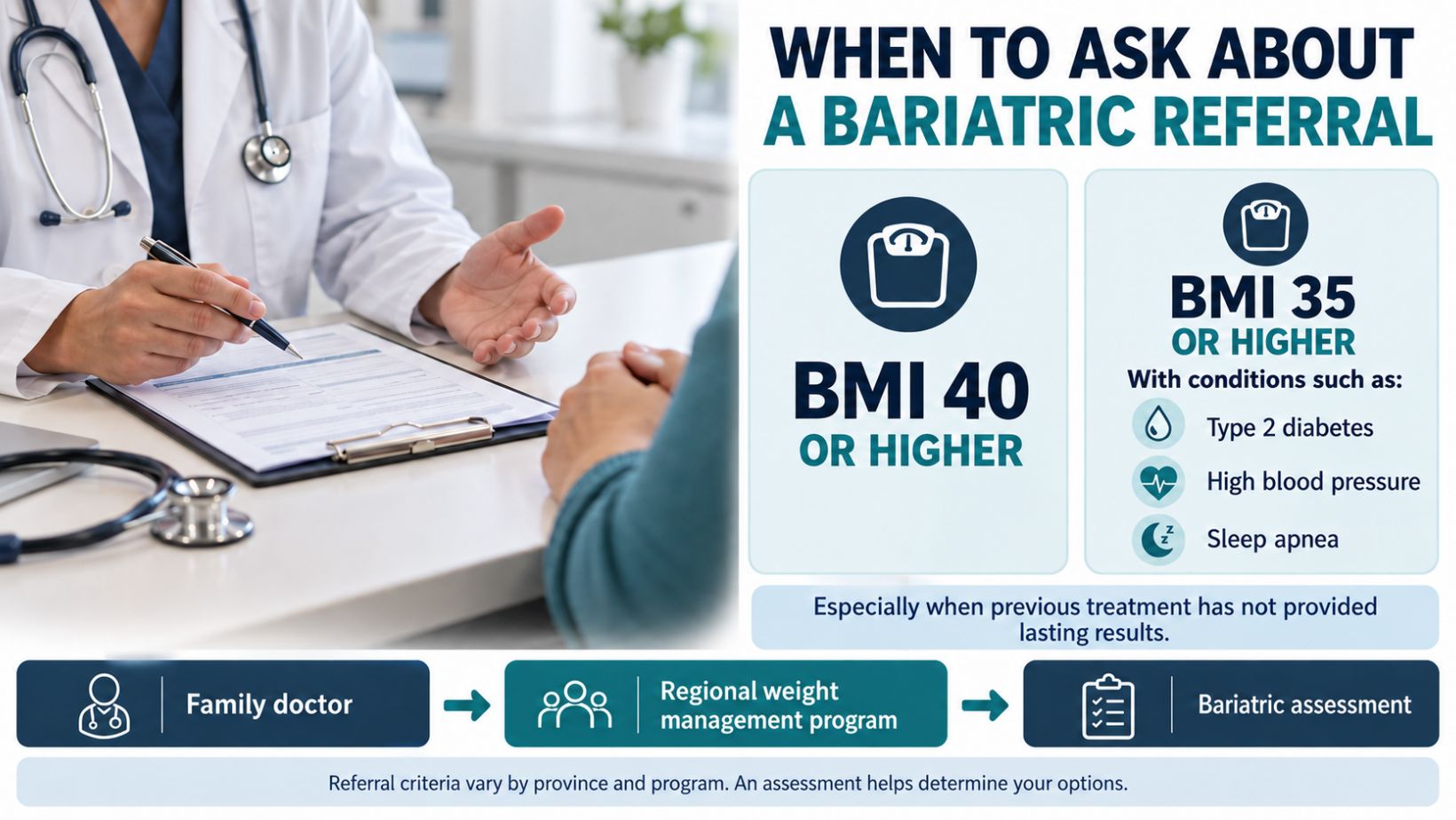
You might consider a referral if your body mass index is 40 or higher, or 35 or higher with conditions like type 2 diabetes, high blood pressure, or sleep apnea, and diet, exercise, and medical care have not given you lasting results. In Canada, most people begin with their family doctor, who can refer you to a regional weight management or surgical program. If you are unsure how that first doctor fits in, our guide on the difference between GP and family medicine explains it clearly.
Seeing a bariatric surgeon does not mean you have committed to an operation. Many people leave the first visit with a plan that includes nutrition support or medication, and surgery is discussed only if it is truly the next step.
Before you go, gather your medication list, records of past weight loss efforts, and notes from any previous surgery. If you would like an independent physician view while you prepare, a medical consultant can help you make sense of your records and shape the questions you want to ask.
How Doctors Train for This Specialty
The path is long. A future bariatric surgeon completes medical school, then a residency in general surgery, and then additional training in weight loss and metabolic surgery. In Canada, general surgeons typically hold Royal College certification, and some pursue extra certification in obesity medicine.
You can see this kind of specialization in our own network, where Karim Ramji is listed as a bariatric surgeon among MDconsultants physician consultants. It also echoes what we explained in What Does a Medicolegal Consultant Do?, where the more precisely a physician’s specialty matches the question, the more reliable the answer. A bariatric surgeon is a good example of narrow and deep expertise applied to one very specific health problem.
What Happens Behind the Scenes at a Bariatric Program
You may only see the clinic visit, but a lot of planning happens out of sight, from operating room scheduling to follow up systems that remind you of appointments. A healthcare consultant can help hospitals and clinics design these pathways so patients move from referral to surgery without long, confusing gaps. Even the most skilled bariatric surgeon relies on that structure to deliver safe, consistent care.
How to Choose a Bariatric Surgeon You Can Trust
Take your time with this decision. When you meet a possible bariatric surgeon, ask about their training, how many procedures they perform each year, and how they track complications and results. Ask who will be on your care team, where the surgery will take place, and what follow up looks like in the first year and beyond. A trustworthy bariatric surgeon will welcome these questions and answer them without hurry.
For reliable background on obesity treatment in Canada, Obesity Canada is a helpful national resource to read before your appointment.
If You Are a Physician Curious About This Path
If you are a physician rather than a patient, this specialty also connects to advisory work. Experience in surgical program design, quality improvement, and patient pathways is valuable beyond the operating room, and healthcare consulting is one way clinicians apply that knowledge to health systems and growing organizations.
Frequently Asked Questions
Who qualifies for bariatric surgery?
Candidates commonly have a body mass index of 40 or higher, or 35 or higher with obesity related conditions such as type 2 diabetes or sleep apnea, along with previous attempts at weight loss through other methods. A full assessment by a specialist team makes the final call.
What is the difference between a bariatric surgeon and a regular surgeon?
A general surgeon treats many conditions, such as hernias, gallbladder disease, and appendicitis. A bariatric surgeon trains in general surgery and then focuses on weight loss and metabolic procedures, along with the long term care that follows.
How long does the training take?
Often well over a decade after high school, including an undergraduate degree, medical school, a general surgery residency, and extra training in weight loss surgery.
Is bariatric surgery worth it?
For many people with severe obesity, surgery leads to major weight loss and better control of conditions like type 2 diabetes. It also carries risks and requires lasting changes in eating habits and regular medical follow up, so the decision deserves a careful conversation with your care team.
Final Thoughts
Understanding this specialty is the first step toward a confident decision, whether it is about your own health, a family member’s care, or your next career move. Take your time, ask questions, and lean on trusted resources.
If you are looking to connect with experienced physicians or explore physician led support for your organization, reach out through our medical consultant network. MDconsultants offers a trusted network of medical professionals ready to help.